
Northborough, MA, United States
About this listing
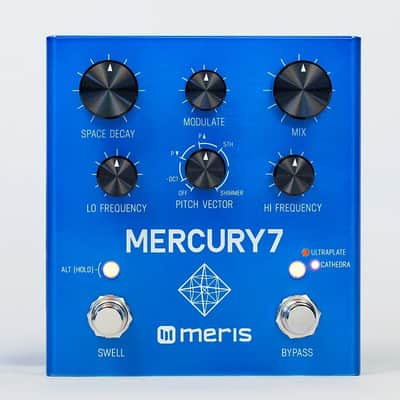
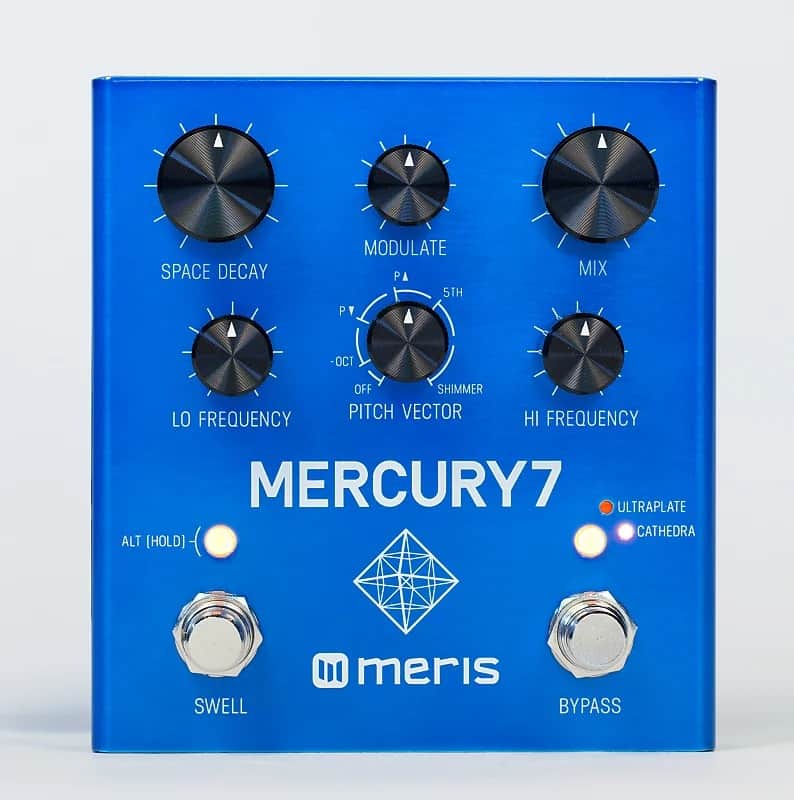
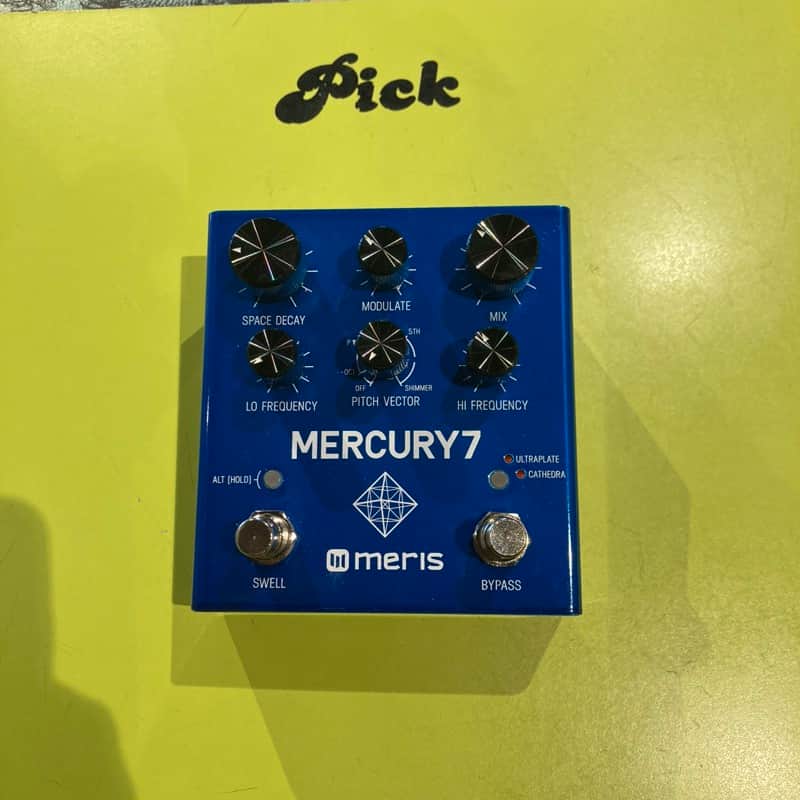
If you buy more than 1 pedal from my store, shipping is free on subsequent purchases for this shipment. Select local pick up on the additional pedals and I will ship them all together. Many Thanks!!Inspired in part by the legendary Lexicon 224 (a unit made famous by, among other things, the Blade Runner soundtrack), the Meris Mercury 7 is a formidable algorithmic DSP reverb. Once only available as a mono rack module, the Mercury 7 is now available in a stereo pedal format. In this more compact pedal package it’s easy to use the Mercury7 as a conventional reverb pedal, but that would be a little like buying an iPad to use its clock. This is a very deep and capable reverb machine. You can make very profound changes in the balance that make pitch effects stronger, less organic, and more reminiscent of movie sound design. Diving Deep The Mercury7’s control panel hints at the unit’s power. But the control layout is elegant and relatively spare compared to some high-power DSP reverbs. There are six knobs (space , modulate, mix, lo frequency, pitch vector, and hi frequency) and two mini buttons: alt, which lets you access secondary functions and store sounds, and a selector for ultraplate or cathedra—the Mercury7’s two reverb algorithms. There are two footswitches for bypass and swell, and there’s also an jack that can be used to control all parameters simultaneously. Needless to say, we can’t cover every aspect of this marvel in the space of a single review. But you don’t have to wander too far to find huge sounds within the Mercury7. Space Sounds Abound The pitch vector knob is the centerpiece of the control set, with settings for off, octave down, slight pitch down, slight pitch up, 5th up, and shimmer (which is an octave up). Factory balance settings for the basic pitch vector colors are excellent. But pressing the alt control as you move the mix knob lets you control how much of the pitch vector shift is present, and you can make very profound changes in the balance that make pitch effects stronger, less organic, and more reminiscent of movie sound design. In the cathedra algorithm—with additions of shimmer pitch vector, low space decay settings, fast and deep modulation settings, and the mix all the way up—my guitar was transformed. The high mix reduced the intensity of my pick attack and the effect bloomed like clouds of sound—making the guitar feel more like some slow-motion organ than a 6-string. To more precisely shape the attack, you can press the alt button and adjust the level with the pitch vector knob. Within these ranges I could summon violin-like notes that were beautiful for haunting, slow, single-note melodies, and keyboard-like pads on open-voiced triads. Moving the pitch vector to 5th up, I conjured ethereal sounds that evoked images of an underwater harp. When I jacked the space decay up, I got a creepy, wind-tunnel-like effect with a super-long trail that lifted chords into the ether. Another very cool thing about these extra-spacy tones is that it’s easy to maintain note articulation (if you need it) through use of the tone shaping controls. Even at extra-ambient settings, I could shape crisply defined individual notes with ample high end
Price€198.19
+ €31.97 Shipping