’90s multi-effects units have spent the last 25 years as a bit of a joke: oversized housings, wildly overcooked presets, and early digital processing that earned a reputation for being noisy or lifeless. But with some of these units selling for around $30 on Reverb, it’s worth asking—is there anything usable hiding in there?
In the video above, we pull a Digitech RP-series unit out of storage and put it to the test. When these first appeared in the early ’90s, the idea of packing amp models and effects into one affordable box felt revolutionary. Today, with hyper-realistic modelers everywhere, it’s easy to dismiss these early attempts entirely.
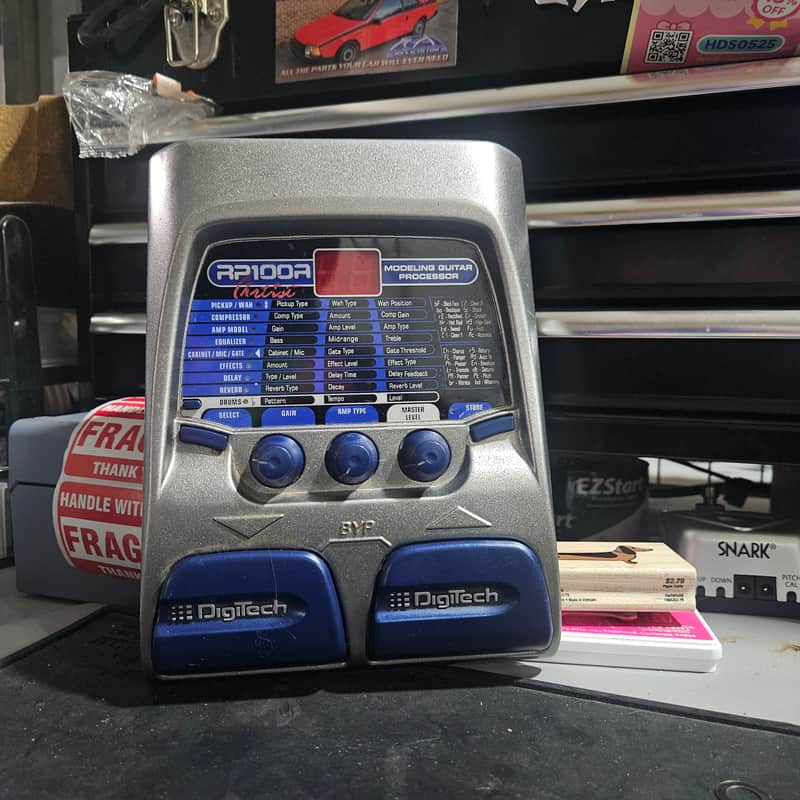
Plugged straight into a Fender Deluxe Reverb, the RP100A's presets sound exactly how you’d expect—huge delays, exaggerated modulation, and settings that assume more is always better. But with a little tweaking, moments of genuine character start to peek through. Taken on their own terms, some of these sounds are surprisingly fun.
Things really open up when the unit is run through a tube DI instead of a traditional amp setup. The added saturation helps smooth out the digital edges, giving the distortions and amp models a livelier, more musical feel. It’s far from modern or transparent—but it is inspiring.
Turning off the amp modeling entirely reveals another side of the unit. Chorus, delay, and reverb settings—while not pristine—have a nostalgic charm that works especially well for texture and atmosphere.
This isn’t a do-it-all solution for gigs or sessions, and at $30, it doesn’t need to be. Think of it as a creative wildcard: a cheap, overlooked box that rewards experimentation and "wrong" usage. Sometimes that’s all you need.
Watch the full video above to hear what it can really do—including what happens when we push it even further by running a synth through it—and grab your own piece of affordable inspiration right here on Reverb.