
Based in Missoula, Montana, Noisemaker effects churn out a variety of boutique pedals at fantastic prices. From classic fuzz and drive effects, to modern delay and modulation, these home-spun pedals cover the gamut of tone with a little something for everyone. We recently spoke to Matt from Noisemaker about his current offerings and what goes into developing a pedal line.
Click here to see the Noisemaker Effects shop on Reverb -- Pedals starting at $49!
What got you started in the effects building game?
I got started when I was in my late teens. I kept effect-heavy bands playing almost constantly, and grew really interested in effects and how they could help shape a musician’s sound. I also took notice of just how expensive effects can be - as I’m sure many teenagers can relate to now, $200+ for a nice delay, or even $150 for a good fuzz isn’t exactly easy to come by. I was in that position, and coming from a background in electronics even then, I decided to try my hand at building a few effects.
I “caught the bug” so to speak, and continued building, usually flipping projects on various forums in order to fund more. I saw that many people who ended up with my early projects were happy with them, and that, in turn, made me happy as well. I loved the fact that I could create something that would inspire other musicians to create new music. To this day that’s one of the biggest perks to building pedals. Coming from this kind of beginning also defined the way I run Noisemaker Effects - I keep prices as low as I can, so that even if someone only has $50, they can easily get a great, handmade fuzz and still have a few bucks left over after.
We've seen a lot of interest in the new Nebula pedal lately. What was your goal with this effect? What sort of player is it suited for?
The Nebula is quite literally the most versatile pedal I’ve ever made. Because of that, I’d recommend it for anyone who wants a time-based effect. It covers both sides: delay and reverb - and in my personal opinion, it does them very, very well. I’m a bit of a delay junky, and after I designed the Nebula it simply took over all time effects on my personal board.
Hear the Nebula in action:
I decided to price it at $120 to make it as affordable as I could. They’re intricate builds and take time, but I’d rather see someone get a single pedal at an affordable price that will last them forever than price it out of a lot of budgets.
You have a bunch of different fuzzes in the line up right now. Which would you recommend for different styles and players?
I try to keep my fuzz lineup pretty diverse. I love fuzz as an effect, and I know a lot of others do as well. I personally like really huge sounding fuzzes, and for people looking for that my first recommendations would be the Kill and Coldwar. They’re big fuzzes, and each have their own sound. For good all-around fuzz tones, as well as vintage sounds, I usually point customers to the Crush and Pompeii.
Then of course, I make a few fuzzes that each have their own unique flavor. The Noise Invaders gets some great bit-crushed tones, which can be used to really give a unique sound. I love it for unique solos and overlaid melodies, as it spices up things that sound pretty normal otherwise. The Donner Party is one of my personal favorites, and specifically because it’s over the top. Its “low gain” is high gain, and when you up the choke, it turns into a nasty fuzz that’s just on the border of out of control - in the best way. Last but not least there’s the Freakshow. At $46, it’s a one knob wall of fuzz, but plays nice with volume knobs to make it more versatile than your average one knob fuzz.


Boutique Fuzz Boxes from Noisemaker, starting at $49.
How bout the Overdrives and Boosts, how do those stack up next to each other?
This is an area where I personally like variety. The Suckerpunch is my go-to boost, and has been since I released it. I wanted a boost with a bit of edge, so that if I wanted, I could crank it up into some overdrive territory. The Suckerpunch does just that - keeping a clean boost for most of it’s control, but going into light, then even heavy overdrive at the higher end.
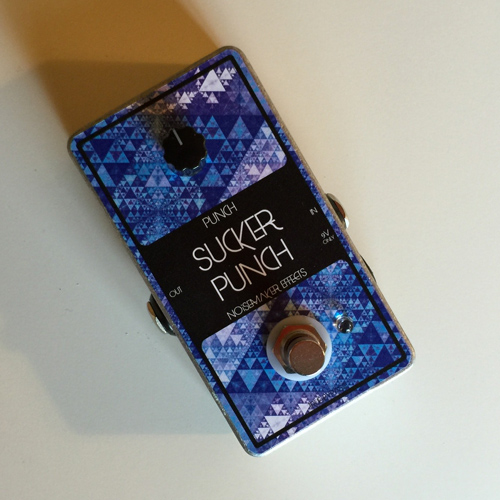
Going from there, I’ve got the Dead Hipster. It’s jangly and low gain. I wanted it almost in the boost range, but more versatile, with a bit more bite, and a lot of clarity. Even when you crank it into near fuzz territory at its highest gain setting, it still retains the clarity and jangle that make it unique. The Loudmouth is my newest overdrive, and there’s a reason it’s named that. It is, by far, the loudest pedal I’ve ever made. If you want something to up the gain and slam your amp’s input, this is the pedal. I wanted a very amp-like response on it, and it really nails that. I keep one on my personal board, and it’s almost always on.
The Soviet is my longest running overdrive, and there are several out there that are still kicking after years of use. It’s gritty, raunchy, and keeps a solid gain range. I wanted an overdrive that got a sort of fuzzy decay - taking it just to the edge of being a fuzz, but still very much an overdrive. The Soviet has seen a lot of variation over the years that I’ve made it, but the core circuit has always stayed the same, as it just sounds great and gives a unique take on an all around overdrive.
How do you decide what kind of pedal to tackle next?
I usually go by personal need. I’ll get a sound in my head, whether from my own playing needing that certain something, or from being inspired by something I hear in another musician’s tone. Like I said above, the inspiration aspect is really big for me. When I hear something that really makes me stop and take it in, I want to create an effect that will do the same for someone in the way that sound did it for me. So whether it’s a heavy fuzz in a rhythm section of a song, or a specific solo, or just the way I want my guitar to echo for a specific composition, it inspires me to create a pedal to suit that need. The Nebula is a great example of this. I was running a Chronos and a Haunt together, and it really made me want that versatility in a single effect. So the Nebula came to be.
What's your favorite all time recorded guitar sound?
Omar Rodriguez-Lopez’s guitar sound on The Mars Volta’s “Deloused in the Comatorium”. That album was by far my biggest inspiration as a guitarist, musician, effect user, and builder. It’s still one of my go-to albums to put on while building. The sheer layers of effects in the tracks really made me realize just what you could do with a guitar, and that has always been an incredibly appealing aspect of the instrument for me.
Noisemaker Effects Official