


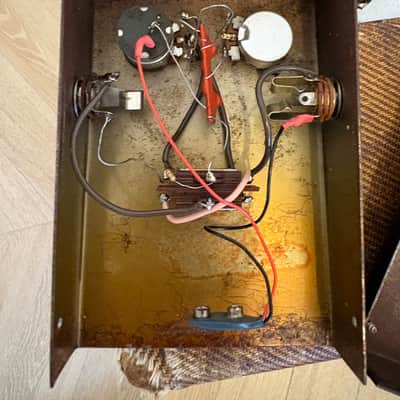


1969 Rosac Electronics Nu-Fuzz ED Sanner Mosrite Fuzzrite Rare


Our users rate Reverb
Super Rare Fuzz
This late-1960s NU-Fuzz sits in one of the most fascinating and least documented corners of fuzz history a transitional era when distortion circuits were still being invented, not replicated.
Built in the experimental spirit of early American electronics and strongly tied to the design lineage of Ed Sanner the engineer behind the legendary Mosrite Fuzzrite, this unit carries that same uncompromising philosophy.
Ed set out to design a more usable fuzz than the Fuzzrite. Although the Fuzzrite sounded great, Ed said the problem was there was no depth, so, in response Ed designed a circuit in the NU-FUZZ similar to the Fuzzrite but also included a tone knob so you could control the amount of depth. Ed say's "this is an improvement on the original design". "You can really dial in the depth and is more versatile with a variety of tones now"
The Rosac company shut down production by 1971 and not many NU-FUZZ pedals were produced. Today they are highly collectable among fuzz enthusiast's.
Plugging into this NU-Fuzz is not like engaging an effect — it is like opening a system that reacts differently every time you touch it. Kind of Tube sounding with a large Fuzz or slight distortion depending on input gain. A wide dynamic but almost compressed fuzz depending on settings.
At its core, this circuit is defined by an unusually wide and musical response to both tone shaping and guitar volume interaction.
With the Tone control rolled back, the sound becomes:
• thick, saturated and almost liquid
• compressed in a way reminiscent of Tone Bender Mk-style fuzzes
• smooth enough to drift toward Muff-like sustain
• and surprisingly interactive with the guitar volume, where it can approach Fuzz Face-like cleanup behaviour
In this range, the fuzz feels organic, almost vocal — notes bloom, decay slowly, and collapse into warm harmonic layers rather than harsh distortion.
As the Tone control is opened up, the personality of the circuit shifts dramatically.
The sound becomes:
• sharper
• more immediate
• more wild
At higher Tone settings, the character aligns closely with:
• the raw, cutting aggression of Maestro FZ
• the wiry, mid-forward instability of the original Fuzzrite concept
The attack becomes almost percussive.
Harmonics splinter and interlock.
Chords don’t just distort they fracture into moving textures.
Single notes cut through with a razor-like, almost electrical presence.
Guitar volume is a cleanup tool but here act even like a second gain stage and Pick attack changes the harmonic structure in real time. The circuit reacts differently depending on impedance and input strength, It can move from near-clean fractured tones to full collapse fuzz with a single gesture like a continuous transformation of fuzz states under your fingers.
Reverb Buyer Protection
Reverb has your back if your item is lost, damaged, or doesn't match its description. Simply report any issues within 7 days and we'll help you get a full refund.Learn more about Reverb Buyer Protection.
| Listed | 7 hours ago |
|---|---|
| Condition | Very Good (Used) Very Good items may show a few slight marks or scratches but are fully functional and in overall great shape.Learn more |
| Brand | |
| Model |
|
| Finish |
|
| Categories | |
| Year |
|
| Made In |
|
Product safety information may be available here.

