BOUTIQUE ANALOGUE GUITAR AMP "Charlotte" Hardwood, Celestion, Colson of York
This seller has not set a shipping cost for Sweden. Please contact them to ask about shipping.

Our users rate Reverb
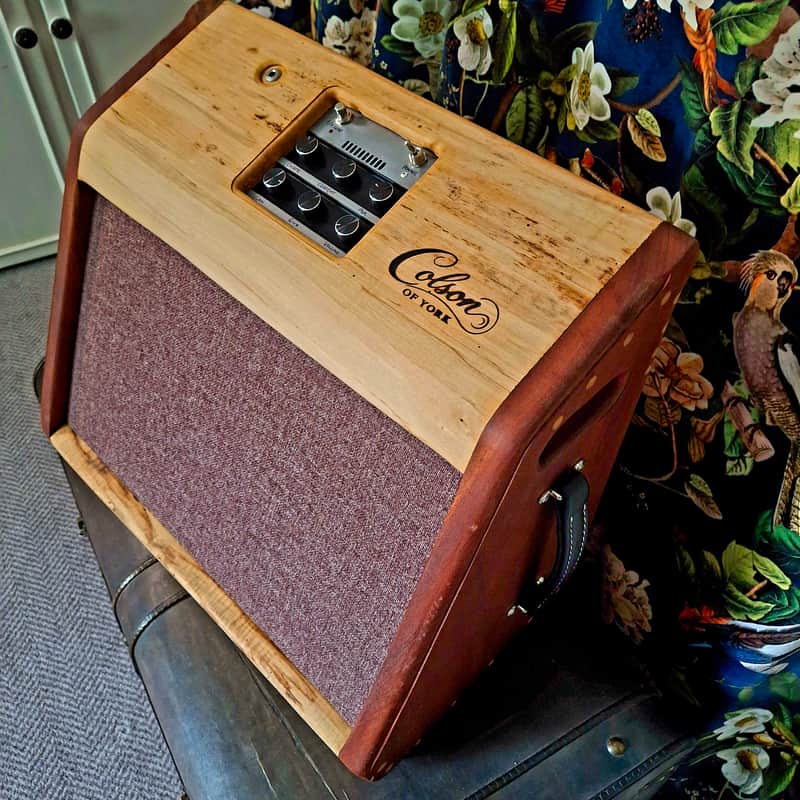
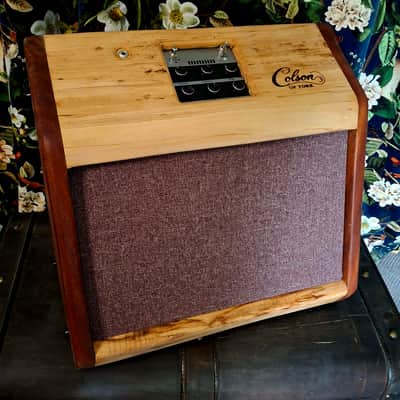
This is Charlotte, one of The Three Sisters of Ainsty, the first official Colson of York amplifier series.
She is a completely unique, one-off handmade analogue guitar amplifier, built by Drew Colson on the outskirts of York.
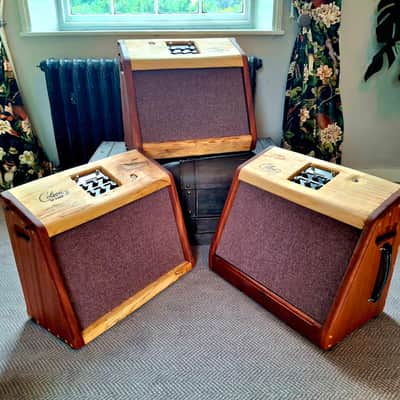
There is only one Charlotte. The Three Sisters of Ainsty comprises three amplifiers: Maria, Charlotte and Emily. Once they are sold, the series is complete. It will never be repeated.
The Three Sisters of Ainsty
The Three Sisters of Ainsty is a hand-crafted series of three one-off amplifiers by Colson of York.
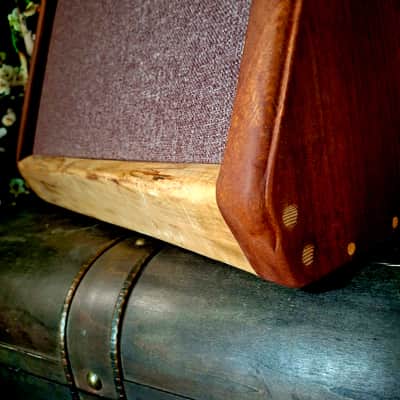
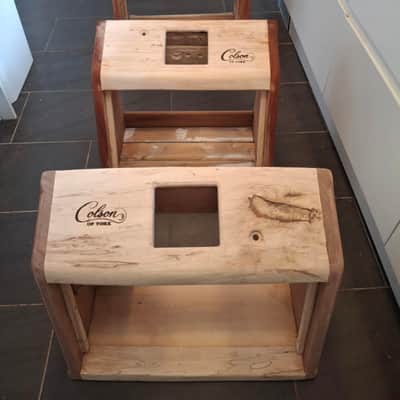
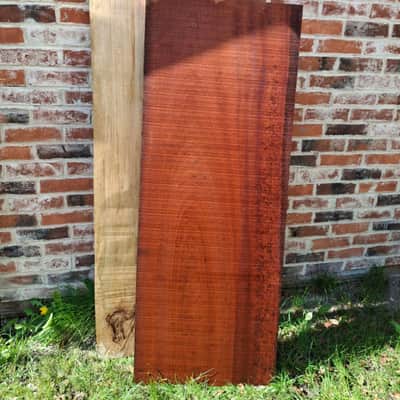
The three amplifiers are not just related by name and design. They are made from the same shared pieces of Yorkshire sycamore and sapele. There was just enough timber in each piece to make the three cabinets, and when the amps are placed side by side, the grain continues across the tops.
These are three separate amplifiers, but they are born from the same wood.
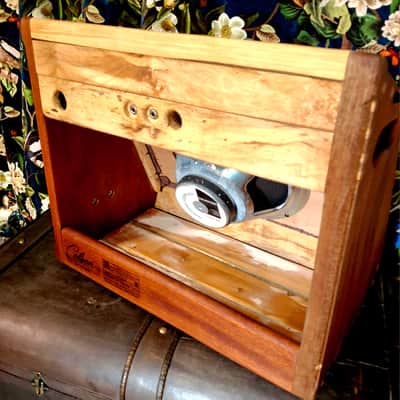
Each cabinet pairs Yorkshire sycamore, sourced near Ripon and seasoned for more than fifteen years, with sapele from an independent hardwood specialist in York. At the heart of each sister is Hughes & Kettner’s Spirit Tone technology, chosen for its fully analogue, pedal-friendly response.
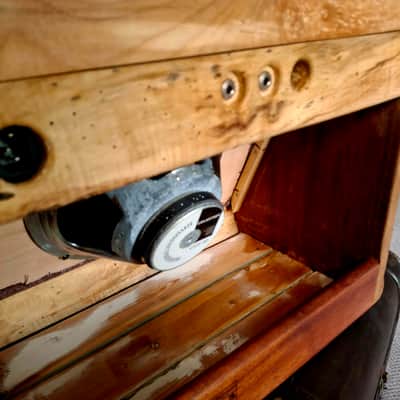
Each amplifier is voiced through a 1998 Celestion G12F-60 loudspeaker, made in Ipswich, England, from the period before Celestion moved much of its guitar speaker manufacturing to China. The speaker was selected for its clear top end, firm low response and balanced character in a deep, semi-open hardwood cabinet.
Key details
- One-off Colson of York handmade guitar amplifier
- First official Colson of York series: The Three Sisters of Ainsty
- Middle sister in the series
- Serial number: CO5-003
- 25 watts output at 8 ohms
- Fully analogue solid-state amplifier
- No valves
- No digital modelling, impulse responses or menu-driven simulation
- Built around Hughes & Kettner Spirit Tone technology
- Colson of York build; not affiliated with, endorsed by or made by Hughes & Kettner
- 1998 Celestion G12F-60 speaker, 8 ohms
- Speaker made in Ipswich, England, on 23 June 1998
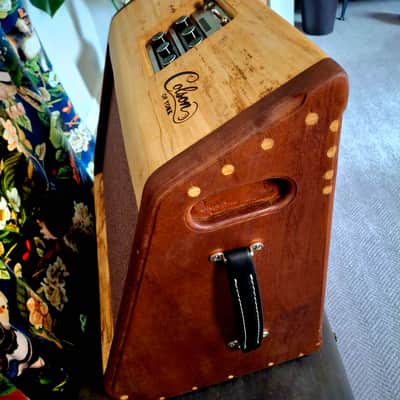
- Hand-built hardwood cabinet
- Yorkshire sycamore, sapele and selected reclaimed timber
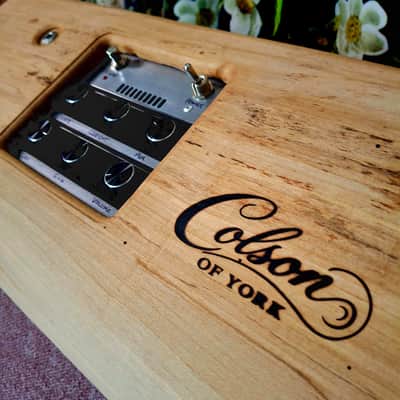
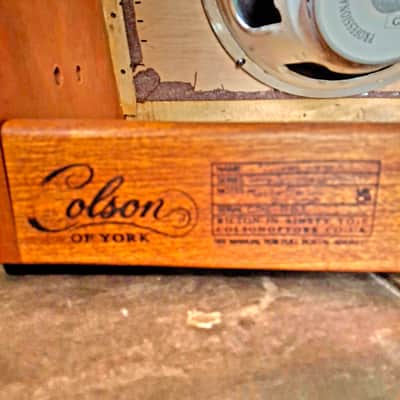
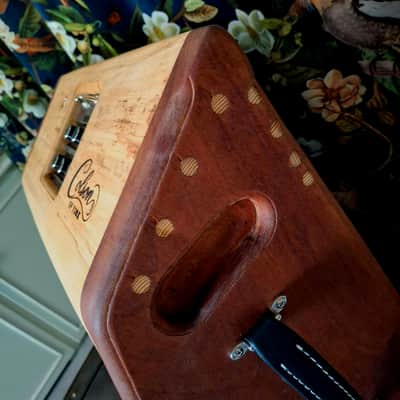
- Colson of York logo branded into the cabinet
- FX loop
- Rear mic cable access hole
- Supplied with record of origin, owner’s notes and build details
- Dimensions: 56cm wide x 49cm high x 34cm deep
- Weight: 14kg
- Analogue solid-state, not valve and not digital
Charlotte is not a valve amp, and she is not a digital modeller.
She is a fully analogue solid-state amplifier. That means there are no valves to replace or bias, and no digital modelling, impulse responses or software processing. The guitar signal is shaped by analogue components such as resistors, capacitors, diodes and transistors, rather than being converted into data and processed by software.
I have built valve amps before, but for The Three Sisters I wanted the reliability and practicality of solid-state without losing the immediacy and response of analogue circuitry.
The amp is built around Hughes & Kettner Spirit Tone technology, rather than a completely scratch-designed analogue circuit. That gives the amp the benefit of serious R&D from an established amplifier company, while the Colson work is in how that platform is voiced, housed and built into a complete amplifier: hardwood cabinet, speaker choice, layout, materials, finish and overall feel.
This is a Colson of York build and is not affiliated with, endorsed by or made by Hughes & Kettner.
The cabinet
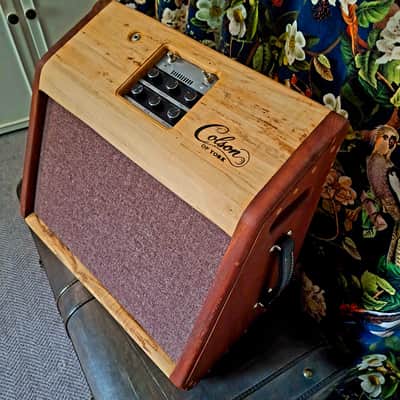
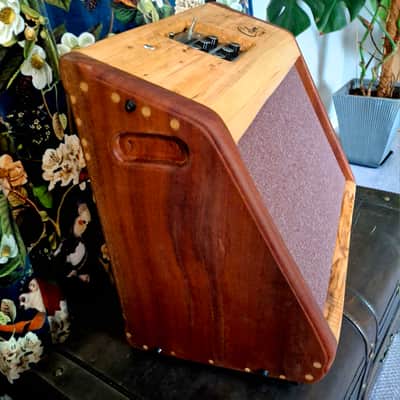
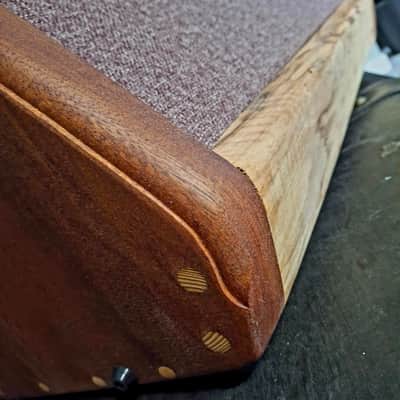
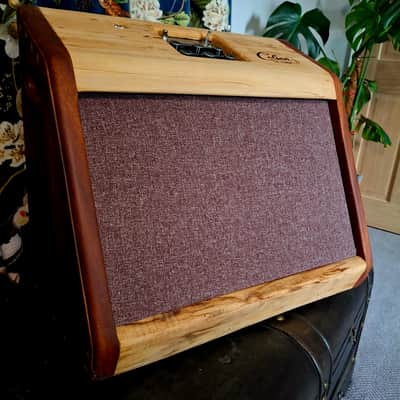
Charlotte is built predominantly from Yorkshire sycamore and sapele. The sycamore was sourced near Ripon, spalted, air dried and seasoned for more than fifteen years, almost ten of them by me personally. The sapele was sourced from an independent hardwood specialist in York.
The result is a highly individual hardwood cabinet, with natural colouration, figure and grain that cannot be repeated.
Alongside Yorkshire sycamore and sapele, her base is made from slatted pine repurposed from the rear door of my 1815 Georgian house in Bilton-in-Ainsty. That gives her a direct material connection to the place where the amplifier was built, while keeping the overall design sleeker and more understated than Maria or Emily.
She has the same 25-watt analogue platform and 1998 English Celestion G12F-60 speaker as the other sisters, but with her own cabinet proportions, stance and character.
Absolutely no MDF has been used in the cabinet.
The speaker
The Celestion G12F-60 is a major part of the voice of this amplifier.
All three sisters use 12-inch, 8-ohm Celestion G12F-60 speakers, made in Ipswich, England, on 23 June 1998. These speakers come from the period before Celestion moved its guitar speaker manufacturing to China.
Each speaker was 27 years old at the birth of its amplifier, putting The Three Sisters straight into 27 Club territory, which is one of the most loaded numbers in guitar and music history.
I chose these speakers for their clear top end, firm low response and balanced character in a deep, semi-open hardwood cabinet.
The result is an amp with clarity, projection and enough low-end authority to feel commanding.
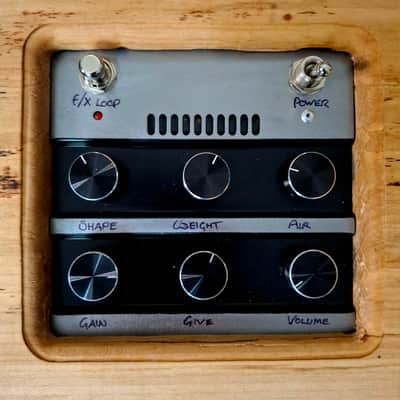
The controls
Shape sets the overall tonal character of the amplifier, moving from a thicker, more mid-forward voice to a wider, more open sound with more bass and top-end extension.
Weight adjusts the depth and firmness of the low end, changing how much physical push and authority the amp has.
Air controls upper presence, clarity and openness. Higher settings bring the guitar further forward and add more edge and projection.
Gain sets how hard the amplifier’s front end is driven, from cleaner and more open to more compressed, biting and overdriven.
Give adjusts the way the amp yields under the note when pushed. Lower settings feel firmer and faster; higher settings feel softer, more compressed and more fluid.
Volume sets the final output level.
FX loop
The FX loop lets you place selected pedals after the amplifier’s main voice and drive section.
This is ideal for effects such as delay, reverb and modulation, where you may want repeats, trails or movement to sit around the sound of the amp rather than being driven into the front end.
Rear mic cable access
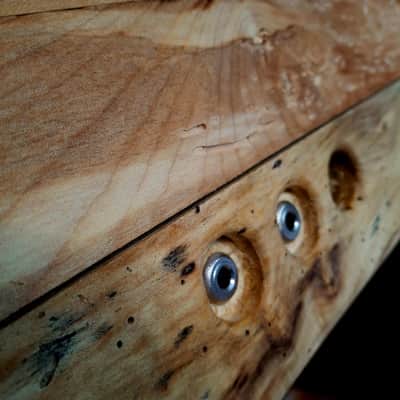
There is a round access hole in the rear of the cabinet.
This can be used to thread a microphone cable through and over the amp, allowing a mic to be rested against the front speaker cloth if the amp needs to be miked in a live environment.
Built by Drew Colson
Colson of York amplifiers are built individually by me, Drew Colson.
I am a gigging guitarist, open mic and jam session host, freelance writer and lifelong student of how things work. I have owned and tested dozens of amplifiers over the years, and Colson of York grew from wanting something that felt immediate, responsive and natural with pedals.
Each amplifier is built with no production line and no outside cabinet-making team. It is all done one at a time, from cutting and sanding to soldering, finishing, testing and refining.
What’s included
- Colson of York "Charlotte" amplifier
- Record of origin
- Owner’s notes
- Build details
Collection and delivery
Collection is welcome from near York. I can also arrange free courier delivery within the UK.
Final note
This is not a mass-produced amplifier.
Charlotte is a one-off Colson of York piece from the first official series. She is a handmade analogue amp with a hardwood cabinet, 1998 English Celestion speaker and a story that cannot be repeated.
If you are looking for something rare, responsive and genuinely individual, this is one of the first opportunities to own a Colson of York amplifier.
| Condition | Brand New (New) Brand New items are sold by an authorized dealer or original builder and include all original packaging.Learn more |
|---|---|
| Brand |
|
| Model |
|
| Categories | |
| Year |
|
| Made In |
|
Product safety information may be available here.

