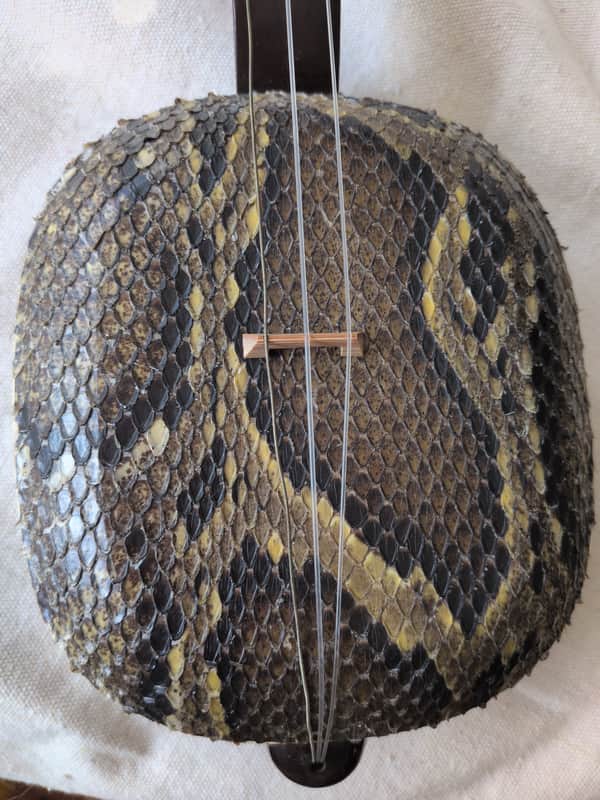
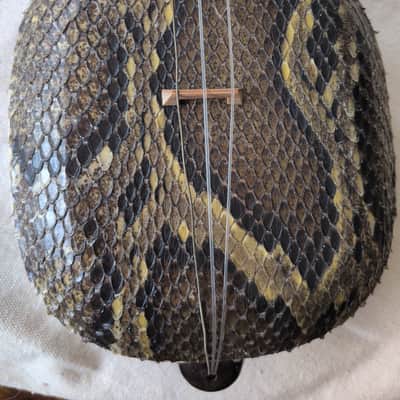
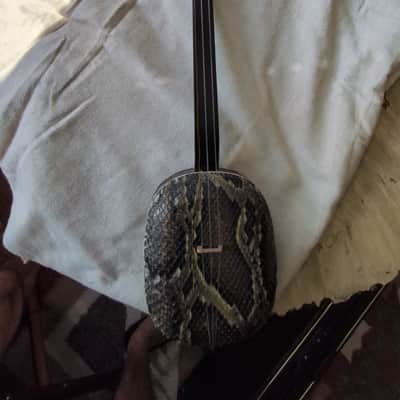
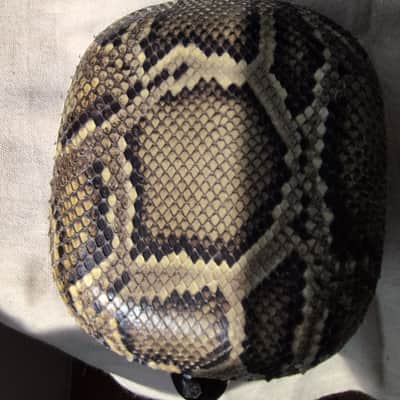
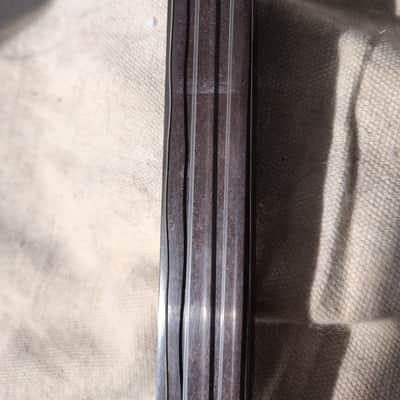
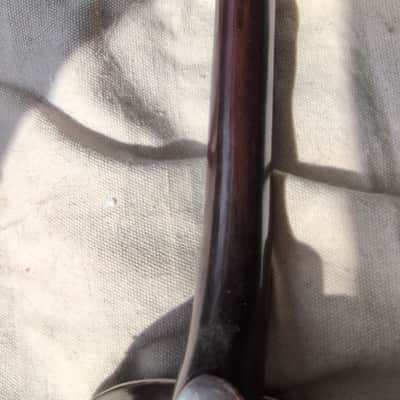
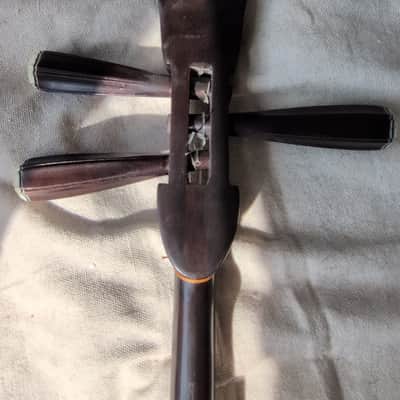
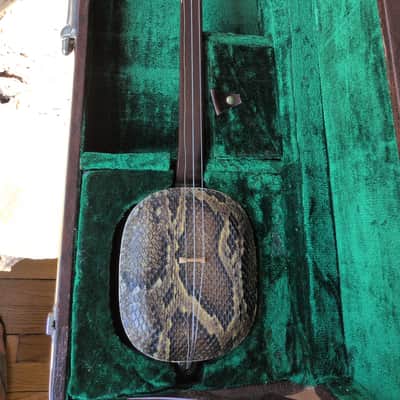
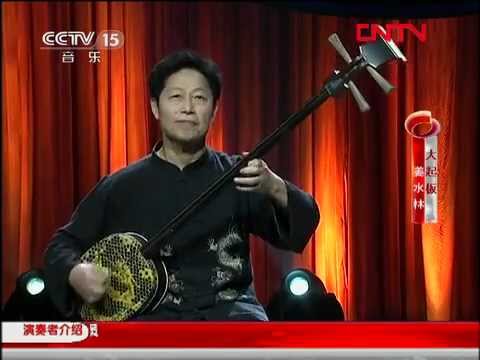
Da Sanxian Traditional Chinese plucked string instrument Rosewood Snake Skin 三弦
This seller has not set a shipping cost for Denmark. Please contact them to ask about shipping.
Our users rate Reverb
Da Sanxian 三弦
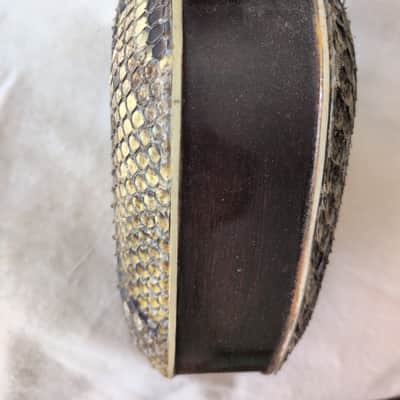
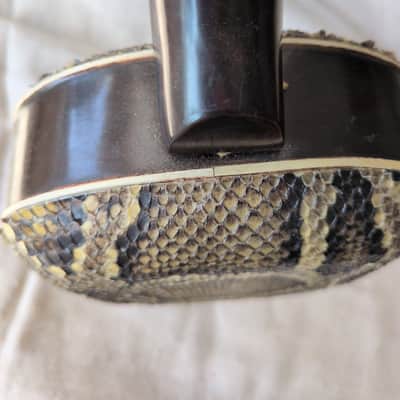
Total lenght 35-37 inch. 89-94cm. - Snake body 7" | 18cm.
The Sanxian, also known as 三弦, is a traditional Chinese plucked string instrument, which has also spread to Ryukyu (modern-day Okinawa) and Japan. The origins of the Sanxian are not definitively established, but it is believed to have evolved from the Xiantao (弦鼗), a stringed instrument from the Qin-Han period. The term “Sanxian” first appeared in the Tang Dynasty in Cui Lingqin’s (崔令钦) “Jiaofang Ji” (《教坊记》), but without detailed description of its structure.
The Sanxian flourished during the Yuan Dynasty, becoming a primary accompanying instrument for Yuanqu music. According to Ming Dynasty scholar Yang Shen (杨慎), the modern form of the Sanxian originated in the Yuan era. However, Qing Dynasty writer Mao Qiling (毛其龄) suggested in his “Xi He Cihua” (《西河词话》) that the instrument dates back to the Qin Dynasty, evolving from the 30-drum setup known as Gujugujuzhi (鼓鼓之制).
Archaeological discoveries, such as the stone carvings of musicians in a Southern Song tomb in Guangyuan, Sichuan, and the Sanxian figurines in a Jin tomb in Jiaozuo, Henan, indicate that the Sanxian existed well before the Yuan Dynasty.
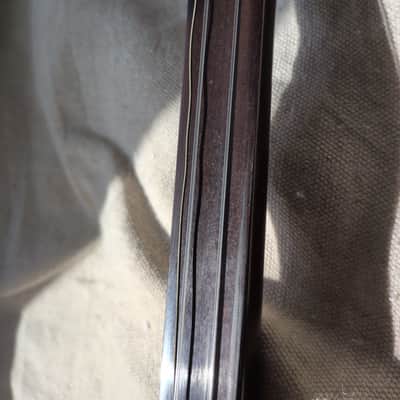
The Sanxian is named for its three strings. It is composed of a head, neck, and body. The neck, which serves as the fingerboard, is relatively long, and the body is covered on both sides with snakeskin. In the 1920s, a variant with additional strings emerged but did not become widely popular. The instrument varies in size; the larger version, about 122 cm long, is known as the “Da Sanxian” (大三弦) in northern China, while the smaller version, approximately 95 cm in length, is called the “Xiao Sanxian” (小三弦) in the south.
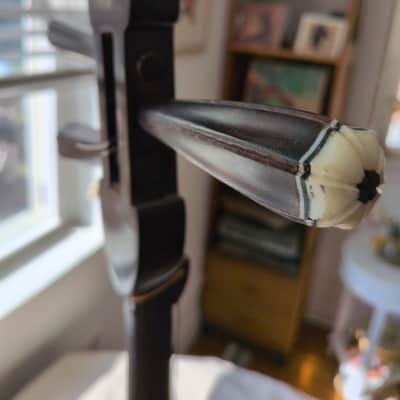
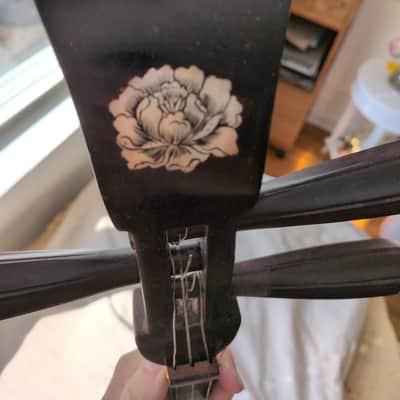
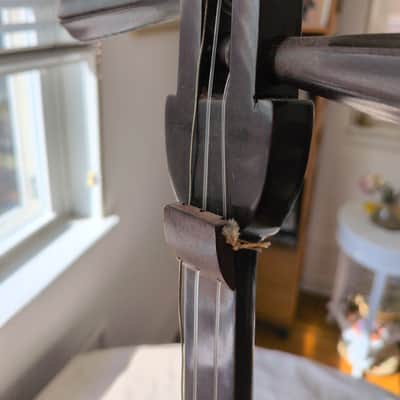
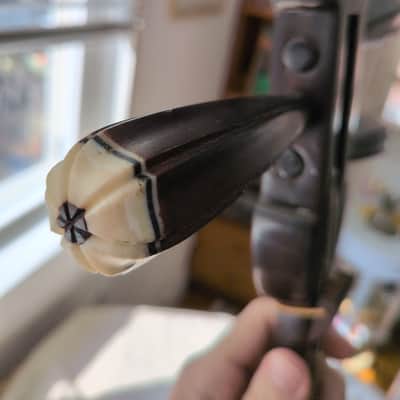
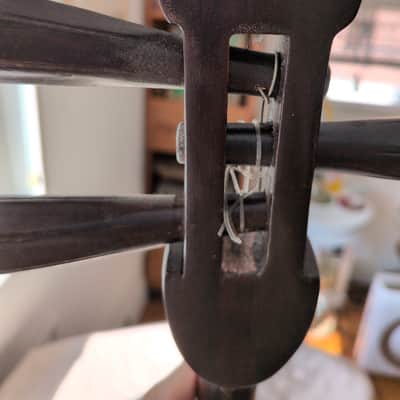
The head of the Sanxian is often shaped like a hoe and may be adorned with ivory or bone pieces. It features grooves and peg holes for string attachment, with two pegs on the left and one on the right.
The body, also called the drum, is slightly box-shaped and made from hollowed-out wood or a wooden frame glued together. The instrument’s sound is dry and loud. In the 1950s and 1960s, Xiao Jian’s modifications resulted in a richer and brighter tone, extending the range to over three octaves. The Sanxian is used in regional music, symphonic ethnic orchestras, and has a significant repertoire for solo and ensemble performances.
Players typically sit, placing the body of the instrument on the right thigh, with the body angled at 45 degrees. The playing techniques vary between the Da Sanxian and Xiao Sanxian; the latter is usually played with a plectrum, while the former is often played with artificial fingernails.
The Sanxian’s influence extends beyond China; in Ryukyu, it evolved into the Sanshin (三线), and in Japan into the Shamisen (三味线). In Japanese culture, the Shamisen is sometimes referred to as “Sanxian”.
This instrument is an indispensable part of traditional Chinese performing arts like Beifang Daguban, Suzhou Pingtan, and Nanguan music. It is one of the essential instruments in these performances. Modern musicians in genres like pop and rock (e.g., He Yong (何勇)) have also incorporated the Sanxian into their compositions and performances. Despite its historical significance and versatility, the Sanxian is less commonly learned today compared to instruments like the Guzheng and Pipa.
This item is sold As-Described
This item is sold As-Described and cannot be returned unless it arrives in a condition different from how it was described or photographed. Items must be returned in original, as-shipped condition with all original packaging.Learn More.
| Listed | 2 months ago |
|---|---|
| Condition | Very Good (Used) Very Good items may show a few slight marks or scratches but are fully functional and in overall great shape.Learn more |
| Brand |
|
| Model |
|
| Finish |
|
| Categories |
Product safety information may be available here.

