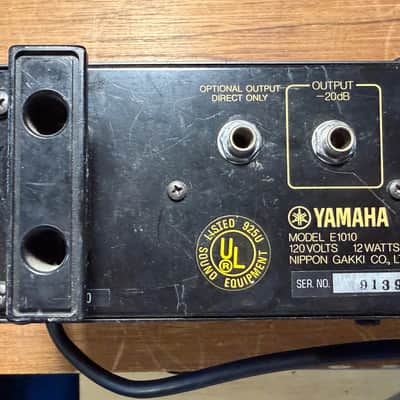
Yamaha E1010 Rack Analog Delay - Serial #9139
This seller has not set a shipping cost for Denmark. Please contact them to ask about shipping.

Our users rate Reverb
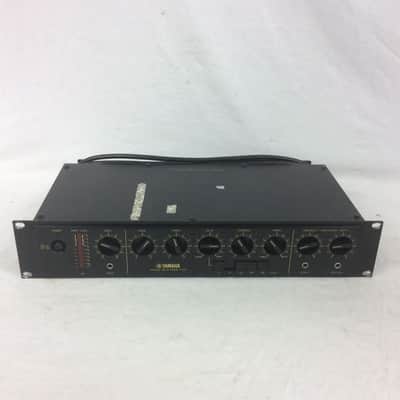
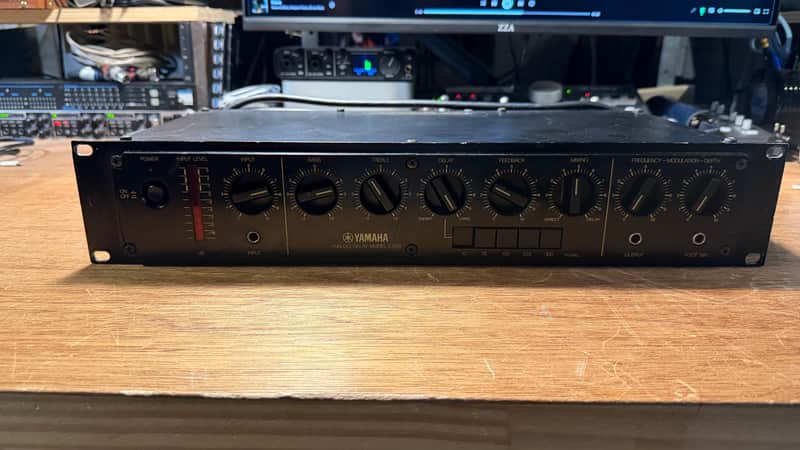
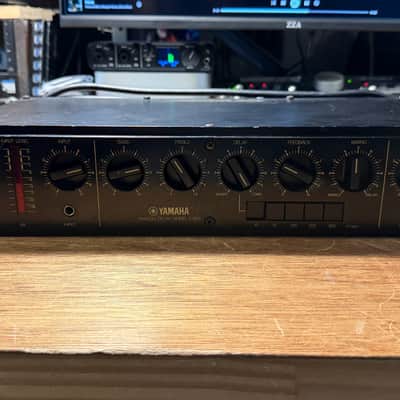
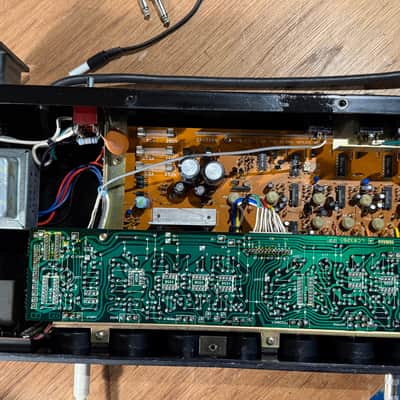
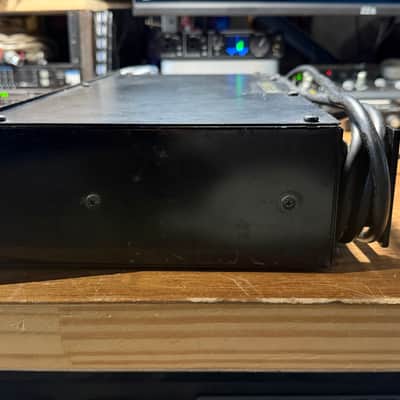
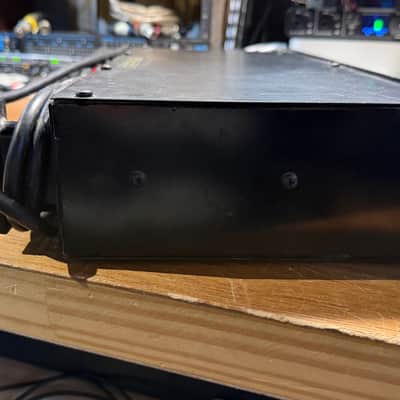
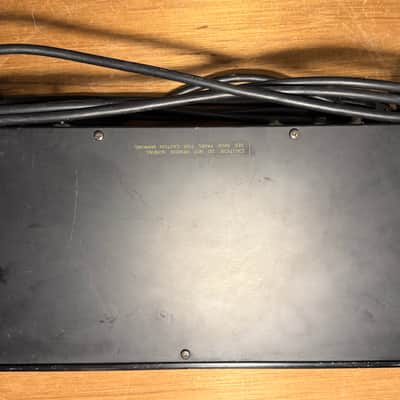
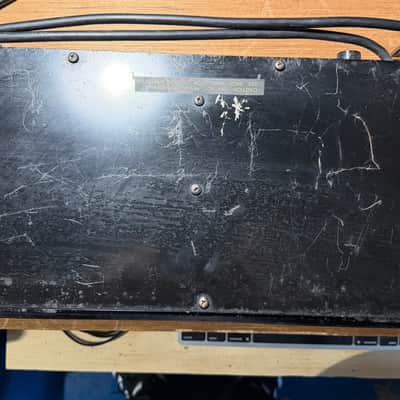
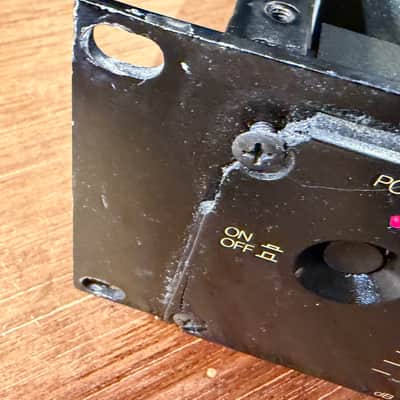
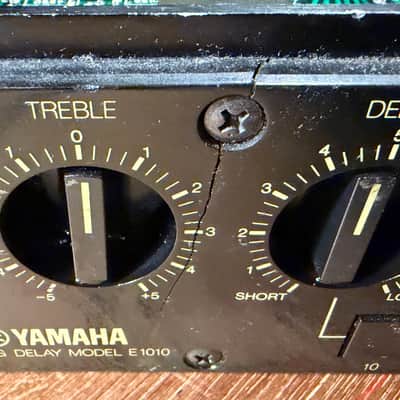
Welcome to the Bucket Brigade! If you want warm and dark... this puppy is for you. This unit is approximately 46-47 years of age... still works and sounds great. Overall in good condition with some scratches... please look at all the pictures (the last two show 2 cracks on the front panel which do not affect any of its magic).
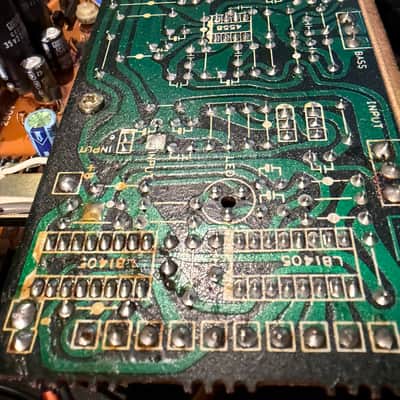
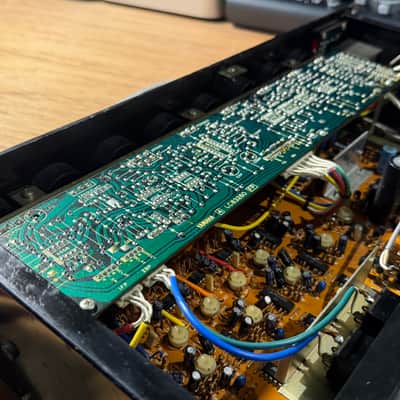
The heart of the unit is its BBD (Bucket Brigade Device) chain. It uses a single MN3004 512-stage BBD for the 10ms range and four chained MN3005 4096-stage BBDs for the longer ranges — you can see the MN3005 chip in your interior photo, along with TC4049 and TC4011 CMOS logic (the BBD clock drivers), multiple 4558 op-amps, and the NE570 compander, which compresses the audio before the delay system and expands it by the same ratio at the output to improve signal-to-noise ratio. That companding is a big part of why these sound better than most BBD delays of the era — thanks to the compander and filters, the E1010 has a better S/N ratio than most analog BBD delays. The LB1405 chips are the LED bargraph drivers for that red input meter.
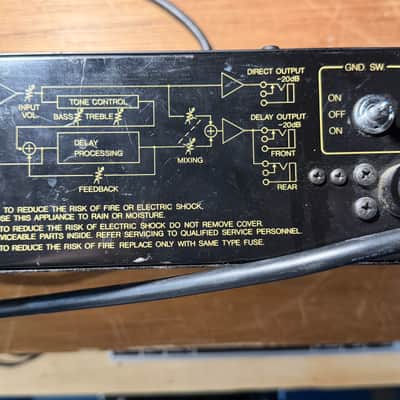
The five buttons under the DELAY/FEEDBACK/MIXING knobs select the base delay range (10, 75, 150, 225, 300 ms), and the DELAY control scales the selected range between 0.25× and 1×. BASS is ±12dB at 70 Hz and TREBLE is ±12dB at 7 kHz, applied to the direct signal before it enters the BBD chain — a useful tone modifier not seen on many BBD delays. The INPUT control has enough gain range to handle small guitar signals up to pro audio +4 dBu levels. The FREQUENCY and DEPTH knobs on the right control the modulation LFO for chorus/flanging textures.
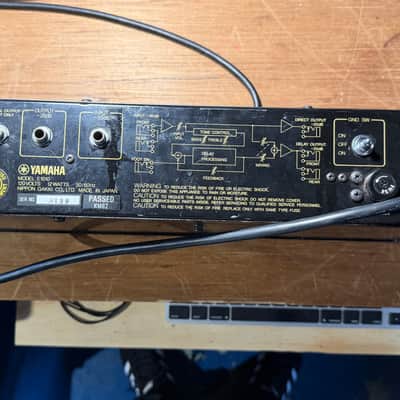
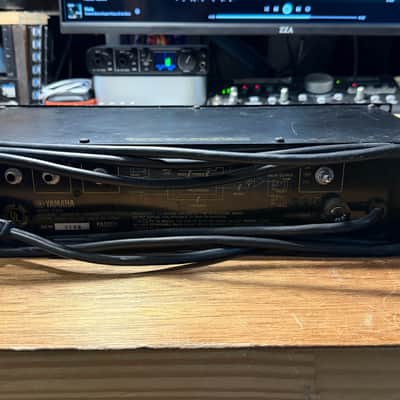
You have front and rear input/output jacks (the front input is -30dB instrument level, rear is line). The "OPTIONAL OUTPUT DIRECT ONLY" jack on the rear is what makes this unit unusually flexible — the direct output is useful for stereo Haas processing: route unprocessed direct signal panned hard left and delayed signal (MIX fully wet) panned hard right. The GND SW. toggle is for ground-lift to kill hum loops.
It's known for warm, dubby BBD echo and, importantly, a strong modulation section — flanging at the short delay times is a particular highlight. Push the FEEDBACK past around 7-8 and it heads into self-oscillation, which is why dub and ambient producers love it. The trade-off is the classic BBD high-frequency rolloff: at 300ms the upper frequency limit is 2 kHz, and even at the shortest delay time the upper frequency limit is 8 kHz — typical of all analog BBD devices. That darkening of the repeats is the sound.
This item is sold As-Described
This item is sold As-Described and cannot be returned unless it arrives in a condition different from how it was described or photographed. Items must be returned in original, as-shipped condition with all original packaging.Learn More.
| Listed | 16 days ago |
|---|---|
| Condition | Good (Used) Good condition items function properly but may exhibit some wear and tear.Learn more |
| Brand | |
| Model |
|
| Finish |
|
| Categories | |
| Year |
|
Product safety information may be available here.