Fully Restored Antique Wood Bell Metronome de Maelzel by Seth Thomas Clocks Dark Walnut, Lacquered Brass Trim, Beats Evenly
This seller has not set a shipping cost for Sweden. Please contact them to ask about shipping.
Our users rate Reverb
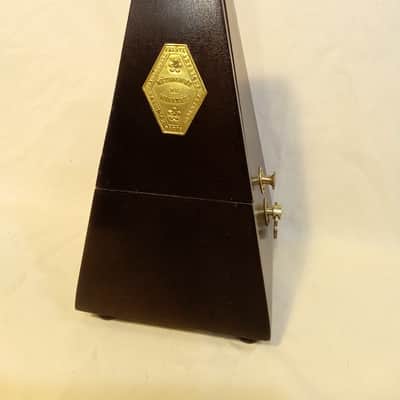
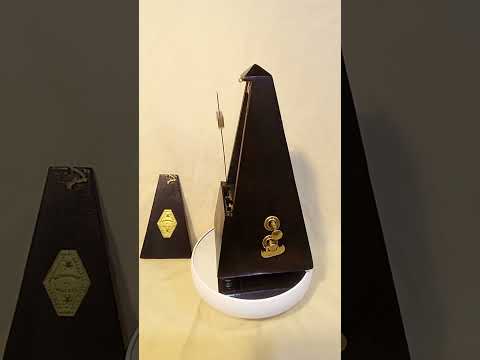
This is a RARE, beautiful dark walnut or ebony, Antique Seth Thomas wind-up Metronome with Bell chime to count out measures! It is a real treasure to find this in all-original excellent condition and was made I think in the 1920s, but could be older. This fully restored and serviced metronome runs strong like it was brand new. The unique bell chime on this metronome is a feature you can use to signal the start of a measure that has either 2, 3, 4, or 6 beats per measure. The bell can also be set to not strike at all, so it functions as regular metronome. This is a very useful but rare option not normally seen on Seth Thomas metronomes, especially after ca. 1945. It is complete with no missing parts, and the solid case has no loose parts or splits. There are areas where the finish has some wear and tiny bumps, but they are mainly visible up close or when the light reflects just right. The dark ebony wood grain gives it a very distinctive and beautiful appearance. The front cover fits reasonably well and appears to be original to this metronome, but might not be. I have included lots of pictures of this metronome in the listing and you can see how beautiful this instrument is! A video with sound of this metronome is also included. The video with sound is here with the pictures and on my pbclocks YouTube channel.
All of the bottom feet are there next to the bottom cover, and the metronome rests completely level on a flat surface. The carefully conserved, original finish is between semi gloss and satin, with light alligatoring, and as mentioned, it has some minor wear, bumps and scuffs as would be expected from one this old in the original finish. They are hard to see from a distance, but I wanted to point them out for you and include many pictures.
This metronome is fully serviced and ready for use: You will probably not find another one of these rare Bell metronomes in this condition with the movement already serviced. Those sellers that actually do this detailed movement service will say so in their listings. It is priced appropriately given the work it takes to properly service one of these back to factory specs.
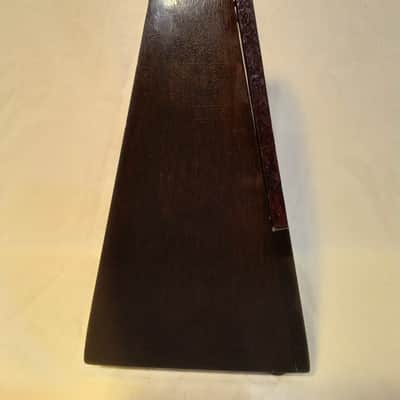
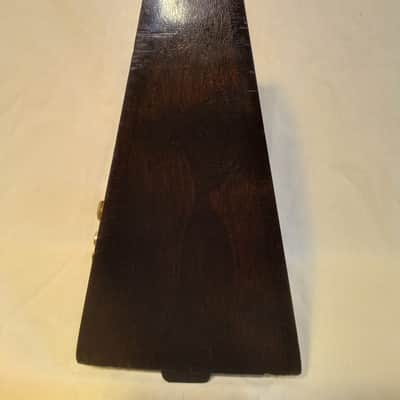
Many areas of the finish hide fingerprints very well which you should be able to see the lack of, in the close up pictures. The walnut or ebony stained wood case is made out of solid wood, possibly birch (no veneers) and has a pretty black / brown grain throughout. Since this is an antique, there are normal signs of age related usage on an instrument this old that has probably gone through generations of musicians.
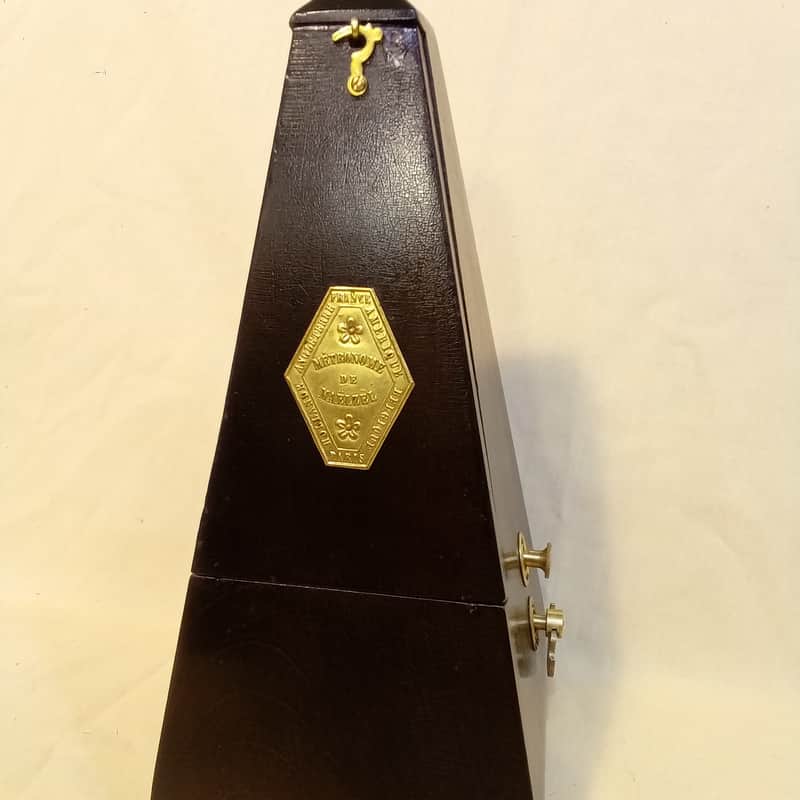
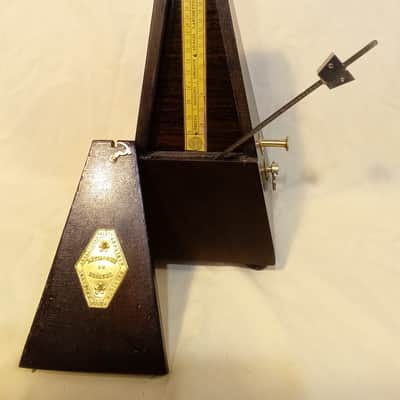
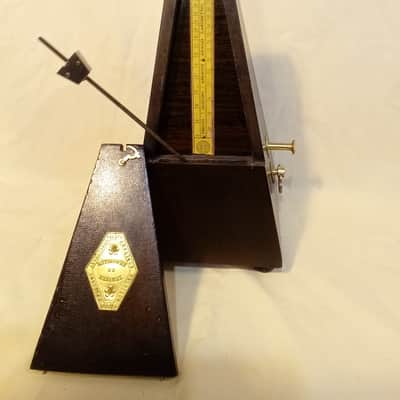
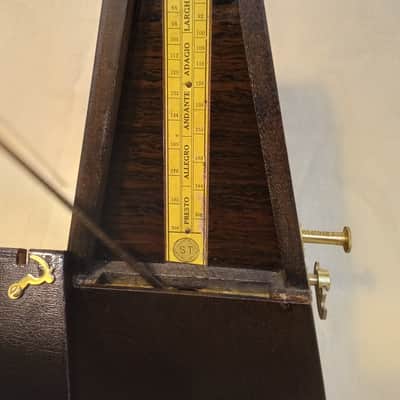
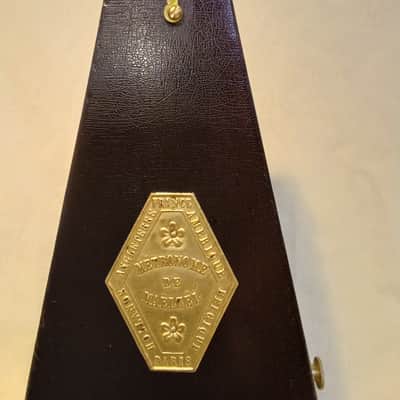
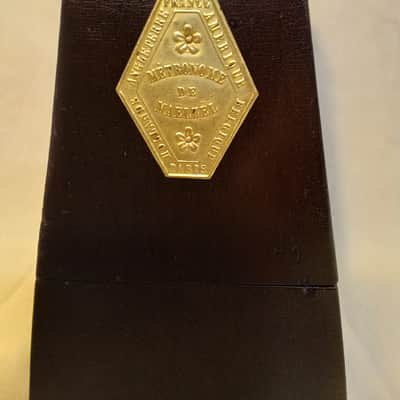
It has an excellent condition, signed "ST" in a diamond trademark beat scale that is the original one, still quite readable with nice contrast, with a couple of wear spots near the right edge. FYI: If you don't see this ST logo at the bottom of the beat scale, it is not a Seth Thomas. The wood on either side of the beat scale is coated in flame grain Adamantine, the same material Seth Thomas used in their mantel clocks starting in 1882. The nice decal on the front dust cover door is the original solid brass plaque. The plaque on the front reads "Metronome De Maelzel, France, Amerique, Belgique, Paris, Hollande, Angleterre", and the Made in USA movement runs like new. It has a wide, very visual pendulum swing with its original chrome plated sliding weight to adjust the tempo and a very even, loud ticking sound as it runs and the bell sounds crystal clear. Note: To keep the weight gripping the stick, there is a thin spring strip that maintains pressure. The weight should only be nudged up and down with pressure applied along the direction of travel. NO pressure should ever be applied pushing the top half inward towards the center, as that would strain the spring strip and cause it to lose grip. Of course, this weight does stay up by itself on the stick as it runs, which is not always the case on other "as found" metronomes. Only a classic mechanical metronome produces the solid and desirable "wood block" ticking sound.
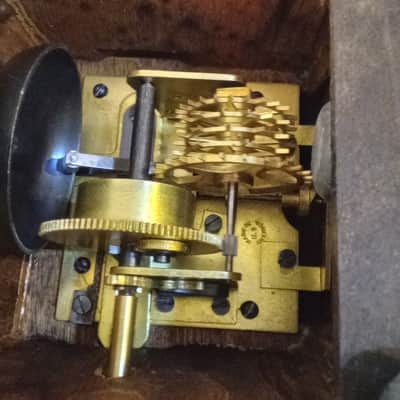
The brass movement was just cleaned, adjusted and oiled, saving you at least $295 over other "as found" metronomes. The movement's condition is actually more important to a musician than the look of the exterior case. Note the lack of lint and built up grease and dirt on the close-up picture of my metronome movements that you might find on other seller's metronomes described as being in very good working condition (if you are lucky to even get a close up picture of the movement). Not many of the other metronomes you may find elsewhere get the proper kind of servicing of the movement and you may soon have issues with those other metronomes that have not been serviced. This is a labor intensive service where the entire movement was disassembled, cleaned, each gear was inspected for damage, pivots polished, hard brass bushings added where needed (pressed in from the inside of the movement), mainspring removed, cleaned and lubricated, and re-assembled. This was done for you so you can enjoy it right away rather than waiting on a repair shop. After cleaning, the entire movement was oiled with synthetic clock oil, and then tested. It should not need cleaning again for about 10 to 20 years. I have included a picture of the movement so you can see its inner beauty and cleanliness, which is also rare to find in an antique metronome. Everything remains original to this movement to preserve its antique value, including the longer mainsprings used by Seth Thomas to ensure very accurate time keeping between windings. The mainspring barrel is unique in that there is a Geneva stop wheel to help prevent overwinding, and this also serves to prevent trying to run the metronome when the spring needs winding, a very useful feature. This metronome was also just calibrated at 80 beats per minute where it is most accurate and will run for over 3000 beats per full winding. I checked the calibration using a precision clock timing tool at other speeds and it runs 5% fast at 40 BPM, 2% slow at 160 and 2% slow at 200 BPM respectively. A respectable accuracy for an antique metronome. The accuracy also varies ever so slightly between fully wound and fully unwound states, and whether the bell is used or not. Most importantly: It keeps an even beat whether the sliding weight is set to 40 or 208 - a challenge to find in other metronomes described as "working perfectly".
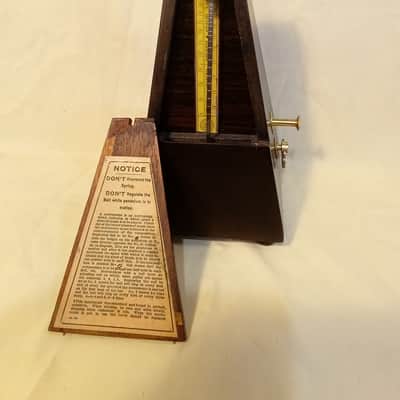
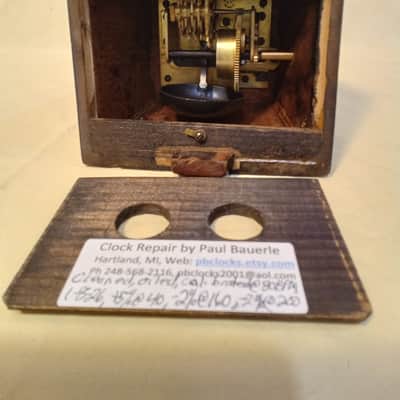
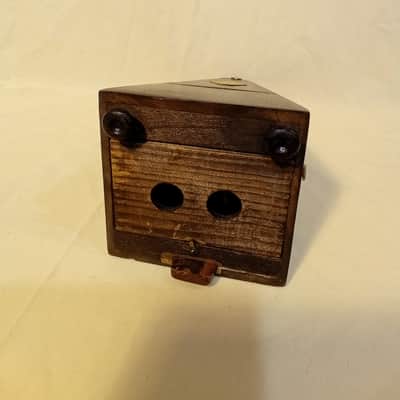
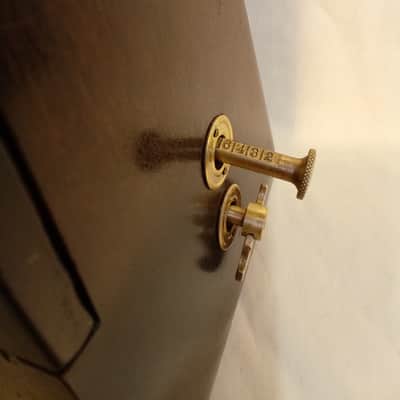
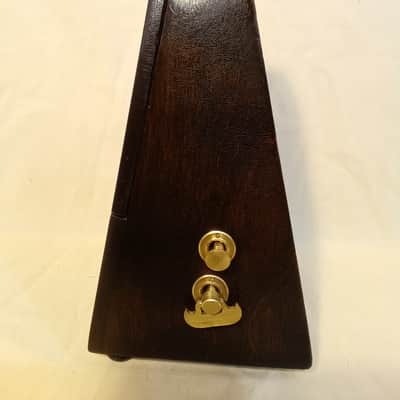
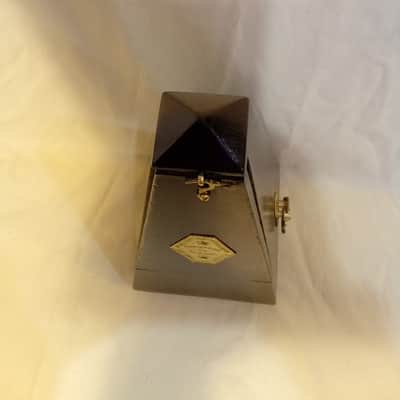
Has the dust cover door in great condition, and an original, brass hook latch that holds the door securely closed, and two steel pins on the bottom that fit in the base of the metronome. Has a 100% complete and yellowed instruction label on the cover, this label seem firmly attached, with a protective gloss finish, most are torn or completely missing by now. The winding key and the measure setting knob are original and they each have the original brass rings next to the case under the keys to protect the finish. Even the tiny finish nails are brass and all original! All exterior brass parts have been polished to look like new and re-lacquered to prevent tarnish (other servicemen omit that important detail and the brass will soon tarnish in a few years or months). The removable bottom cover door is original on this metronome and it fits well with the rest of the wood case. The raised feet and the finger hole are designed to allow the sound of the bell to reflect off the smooth surface (like a piano) the metronome is placed upon, so it is best to avoid metronomes with these feet missing. A picture showing this is available above. This large metronome measures about 9 inches high (as measured from the feet to the very top tip) and 4.5 inches wide. A video with sound of this metronome is in the text above, you probably need to copy the link into a browser window.
Many music teachers recommend the mechanical metronome due to its visual swinging pendulum similar to the way the music conductor moves his or her hands. It is easier to anticipate the downbeat bell signal when seeing this action out of the corner of your eye. I can personally attest to that fact, for a metronome very much like this one is helpful to me as a musician in the Livingston Symphony Orchestra during my individual practice sessions. This metronome must have been cherished its entire life, and it is looking for a new home on your piano or organ, and most of all, it runs great! Perfect for the collector, or for music lessons. This would also make a great present!
If you are looking to purchase a Maelzel type metronome to use in your own music practice sessions, you have come to the right shop! My restored metronomes keep an even beat when put on a level surface whether the sliding weight is set to 40 or 208 - a challenge to find in other metronomes described as "working perfectly". Note that I'm also a musician in the Livingston Symphony Orchestra who uses a mechanical metronome, so I know what it takes to properly service a metronome. I have yet to find a clock repair horologist that does BOTH the professional repair of mechanical metronomes AND actually use a mechanical metronome for their own music practicing.
This is a premium metronome, unmatched by anything made today. The newer ones from Germany or France being made now or within the last decade or so, tend to use plastic in the movement and/or case and feel cheap. Those ones are not built to last and are not able to be fully disassembled for servicing in the future. Also, with their plastic gears having their mainsprings enclosed in plastic barrels, those cannot be lubricated without eventually damaging the plastic. This American made Seth Thomas metronome listed in my shop is for one made of all wood, brass and steel, no plastic at all anywhere, period!
These vintage metronomes amaze me, they are built to last - can you imagine any other mechanical consumer product still working well after nearly 100 years? The truly amazing thing is with proper care they will work easily for another 100 years, as these movements are made to be serviced as easily or easier as other American clocks from long ago! There are no plastic parts in these movements, only brass plates and gears with steel pinions, pivots and arbors. They hold their value and are an excellent investment to add to your collection and estate. No Seth Thomas clock collection is complete without one of these metronomes by this famous clock maker.
Note, I have listed this at a price point to reflect the rarity, quality of the restoration work and time invested to properly service this metronome movement to like-new condition, with appropriate adjustments for light wear showing on the wood finish. This is important when you consider many metronomes you currently find listed have never been cleaned, calibrated and/or have an uneven beat, and show tarnish on the brass parts. It would be a challenge to find a wood Seth Thomas metronome having the Bell Chime option in better cosmetic and mechanical working condition.
Thank you in advance for your business!
| Listed | 6 months ago |
|---|---|
| Condition | Excellent (Used) Excellent items are almost entirely free from blemishes and other visual defects and have been played or used with the utmost care.Learn more |
| Brand | |
| Model |
|
| Finish |
|
| Categories | |
| Year |
|
| Made In |
|
Product safety information may be available here.

