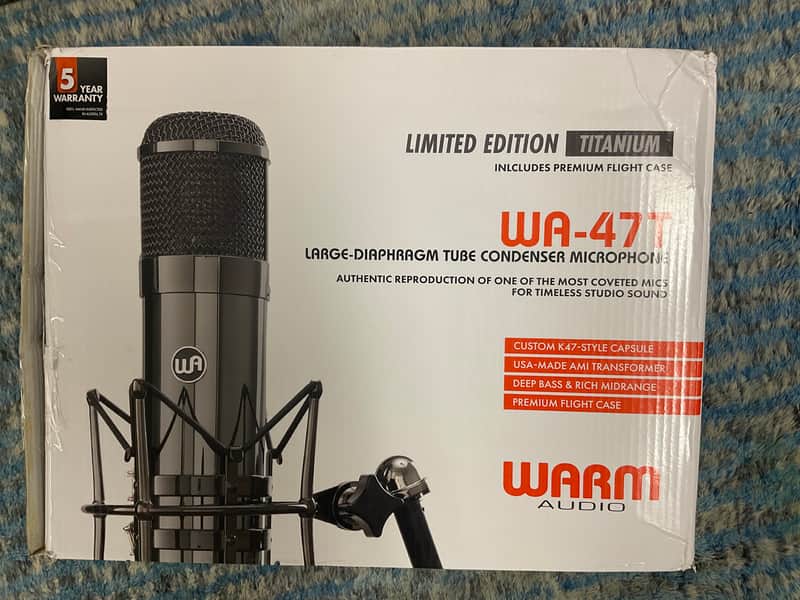
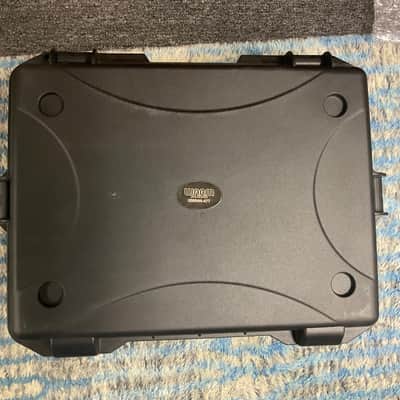
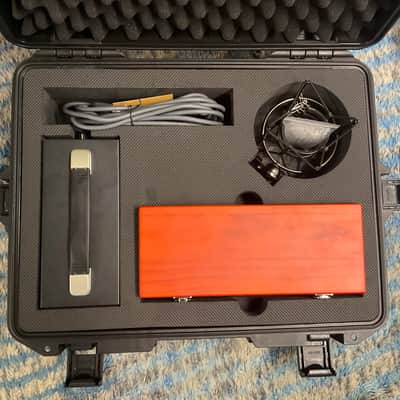
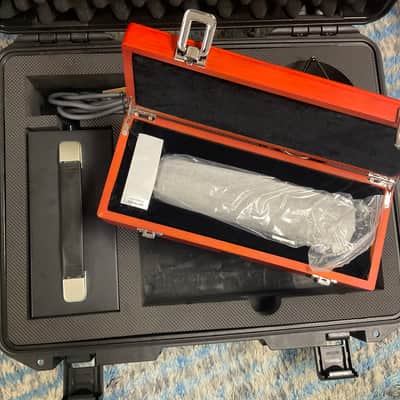
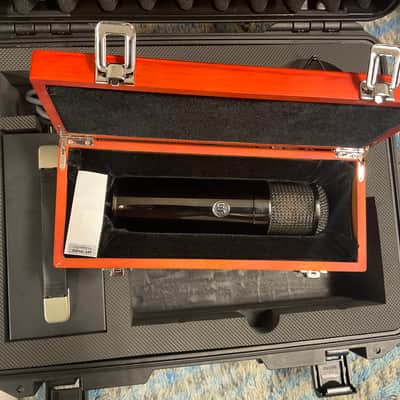

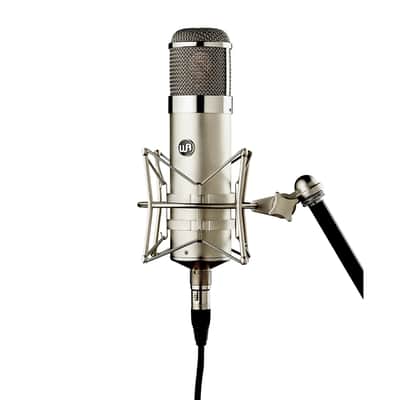
Warm Audio WA-47T (Modified by Signal Art Electronics, now known as TubeMicMods.com)
This seller has not set a shipping cost for Romania. Please contact them to ask about shipping.


Our users rate Reverb
This is a modified WA-47T; it has been extensively upgraded from stock condition by Chad Kelly. Message for questions. I am selling because I ended up enjoying the WA-8000 that I had modded by him more; at least, i think it fits my voice better! The breakdown of the upgrade is below. :)
It came out fantastic, and I used one of my last NOS GE JAN 5751 tubes from my personal stock. Look forward to your thoughts. I normally put an upgrade sticker on the mic but I never felt the silver sticker looked right on the titanium finish, so I include the sticker and you can put it on the mic if desired.Best,Chad
PS:
WA-47, among what was done:
Power Supply:
Steel washers were added to reinforce the channel frame of the mains transformer.
If the power supply is an older model, the 7 pin XLR inlet is modified using a dremel tool to allow the latching mechanism to fully actuate. This is a common issue on older units, which causes the 7pin XLR to come unplugged easily. Note that on latter WA models, this has been already corrected by the factory.
New power supply modification: the PSU uses a generic IC pkg 6v regulator which is manipulated via a diode in the ground path to provide 6.7v for tube heater voltage, where 6.3v is really optimal. We remove this diode and replace it with a wire jumper, which brings the heater voltage down to about 6.1v in real-life measurement, much closer to the required 6.3 and well within tolerances. This not only reduces heat stress on the tube, but on the regulator as well, extending the life of the whole system. It is always better to slightly under-heat than to severely over-heat the tube. This modification makes the mic run even cleaner than before; but more importantly, it GREATLY extends the life of the tubes and solves a longstanding issue with these products ‘eating’ vacuum tubes prematurely.
All 12 electrolytic capacitors are replaced with high grade Nichicon parts (long life, high temp), adhesive added to prevent resonance/cold solder joints. In the power supply, all capacitors in the B+ voltage section are, in addition to being replaced, bypassed with high performance .1uF film capacitors for even cleaner performance. The electrolytics in the filament section are bypassed with high quality multi-layer ceramic capacitors. The sole remaining electrolytic in the microphone board is bypassed with a .1uF high performance WIMA film capacitor.
All screws tightened down, Loctite added as needed, mic and PSU physically rebuilt.
Contact enhancer added to all internal contacts, rotary switch contacts lubricated with silicon grease for more silent operation.
All boards cleaned/reflowed, trimmed, wire lengths tidied up, shortened where possible
Thermal grease added to regular heatsink and adhesive added to hold regulator in place
Bulb pins lubricated and bulb re-seated, bulb housing re-assembled and reinforced to prevent future breakage
Microphone:
Capsule mount and saddle are replaced as needed with higher grade/low resonance parts (as needed, because some units are OK and others need these parts to be replaced).
The 100uF Electrolytic cap in the pattern select circuitry of the mic amplifier board is replaced with a military spec tantalum capacitor or an audio-grade Nichicon electrolytic capacitor, over-spec’d for the required voltage (20v where only 6.3 is needed), and bypassed using a .1uF WIMA film capacitor.
The two 1uF Electrolytic caps in the amplifier circuitry of the mic PCB are upgraded to an audiophile grade JB axial film capacitors or other high quality film capacitor, insulated in Kapton tape.
Tube replaced with selected, burned in preferred replacement tube (TAD 5751 Highgrade), pins cleaned and lubricated, Sandy Levy tube damper rings added, and the tube retaining clamp is modified with a thin strip of aerospace silicon for better contact.
(incorrect value 1.8uF Solen Fastcap) output capacitor replaced with network of NOS PIO (new oldstock, paper-in-oil) capacitors of correct value (1.5uF)
Underside of transformer board and XLR reworked, transformer board bypassed and cleaned up, all wiring directly tied to transformer pins themselves, dedicated mic chassis ground wire added. transformer wrapped with kapton thermal insulating and anti-static tape.
Capsule cleaned, tightened, re-terminated, wire lengths shortened
Adhesive added to polystyrene capacitor in high-z section to reduce microphonics
polystyrene in the high-z section is completely replaced with a higher quality polystyrene capacitor, and a copper shield/kapton tape antistatic layer with drain wire is added to the polystyrene. Polystyrene is also shielded using Cu foil shield layer encapsulated by Kapton tape and equipped with drain wire to pull RFI/EMI directly to chassis ground connection.
RF Suppressor ferrites added to the high-z section at every junction between the capsule and the mic circuitry to ward of RFI/EMI (radio/environmental static) at every possible entry way into the mic amplifier.
In addition to the above items, both the transformer deck and main amplifier deck in the microphone are stripped down and de-soldered and cleaned in an anhydrous alcohol bath, and then repopulated fully with all the very best possible components. The transformer is direct-wired to its pins for shortest possible signal path, and the mic board is re-populated with all the finest components. We even pay special attention to resistors, using some vintage carbon resistors where possible and some custom audiophile-grade ultra-low noise resistors made for us by Precision Resistive Products in Iowa where lowest noise is required, and even in a couple resistors we revert to a ½ watt surface mount thick film resistor because it performs a little better than the discrete components available. Additionally, all internal wiring to the microphone is pulled out and replaced with Belden silver teflon wire.
The 1000pF polystyrene capacitor in the high-z section is replaced with a mil spec 1000pF polystyrene capacitor that is wrapped in Kapton Tape, shielded with Cu foil layer with drain wire straight to chassis ground, then wrapped again in Kapton Tape, then adhered to chassis frame with PerfectGlue to reduce resonance.
Almost all of the wire inside the microphone itself (particularly the six longer run voltage rail and signal wires running alongside either side of the microphone’s frame) are replaced with Belden fine-strand silver teflon wire, which has the lowest capacitance and series resistance of anything else we have sampled. It is expensive, but worth it. Some of the wiring in the high-z section is replaced with either finer silver teflon wire or silicon wire, as required.
Cable:
Stock Gotham 7 pin XLR cable is rebuilt on both ends and labeled, optimized to put the two heavy gauge leads where they do the most good (H+ heater voltage and H- or circuit ground, respectively). Cable is sprayed, cleaned, tested, and re-wrapped.
Important note: because this cable is re-wired to be optimal for the WA-47; if you own other Warm Audio tube mics or other similar Gotham 7 pin cables, you should label this cable for the WA-47 before it gets mixed up with another microphone. Everything should still work if it does get mixed up; but it will not be optimal.
System:
24 hour burn in to break in the tube, capacitors, then re-tested and re-calibrated if applicable.
This item is sold As-Described
This item is sold As-Described and cannot be returned unless it arrives in a condition different from how it was described or photographed. Items must be returned in original, as-shipped condition with all original packaging.Learn More.
| Listed | 10 hours ago |
|---|---|
| Condition | Excellent (Used) Excellent items are almost entirely free from blemishes and other visual defects and have been played or used with the utmost care.Learn more |
| Brand | |
| Model |
|
| Finish |
|
| Categories | |
| Year |
|
| Made In |
|
| Microphone Type |
|
| Polar Pattern |
|
| Wired/Wireless |
|
| Electronics |
|
Product safety information may be available here.

