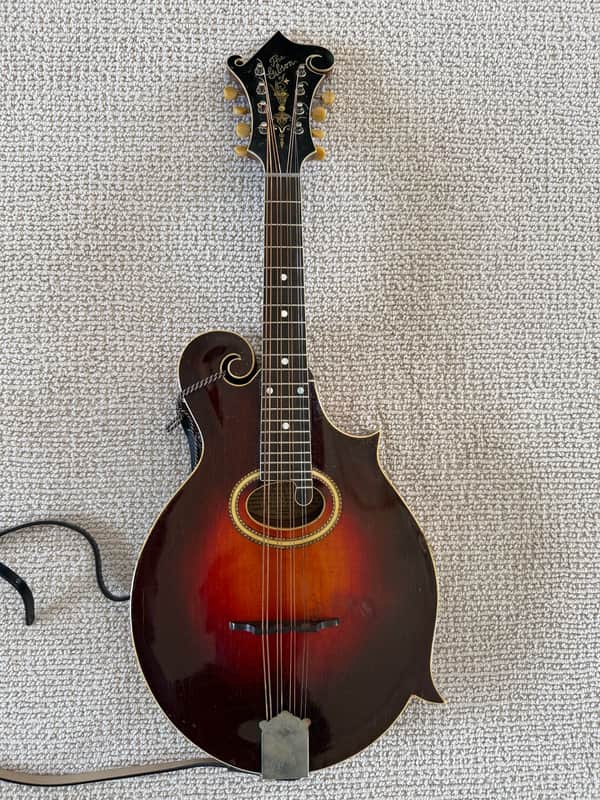
1921 Gibson H4 Mandola
This seller has not set a shipping cost for Hungary. Please contact them to ask about shipping.


Our users rate Reverb
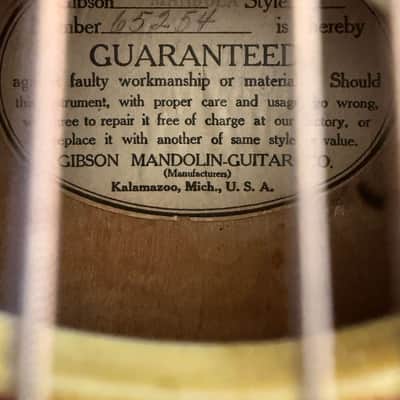
#65254, cherry sunburst finish, with original form fitting hard shell case.
There are few fretted instruments as regal and authoritative as the Gibson H-4 mandola. A larger version of the always-amazing F-4 mandolin, the mandola is tuned one fifth lower, to CGDA (low to high). The sound, as a result of the tuning, the larger size and the longer scale length is strong and demonstrative, full of power, presence and the particular sense of optimism and panache that followed the end of World War I and introduced the Roaring Twenties.
Orville Gibson changed the course of western music by, starting in 1894, applying violin principles to the manufacturing of mandolins and guitars. At a time when a hundred million mandolins had the flat top and the "Neapolitan" roundbelly back (derived from Italian makers) Orville Gibson developed a carved top, carved back instrument in spruce and originally birch (but later maple) on the sides and back. The first mandola came out in 1902 and was simply called "H" just like the slow-talking protagonist on an historically insignificant TV show called CSI:Miami, as an "A" or teardrop style. The first Florentine (F-style) Model H-4 mandola appeared in 1910, based on the cosmetic features and wood choices of the famous Gibson F-4 mandolin that had, like the lowly "H," been on the market since 1902.
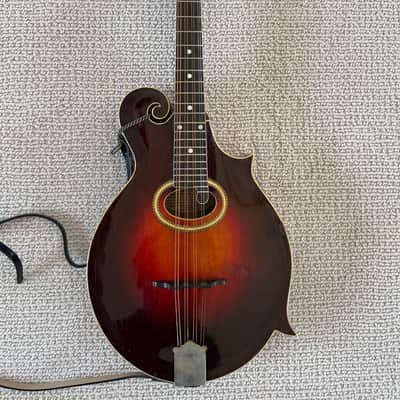
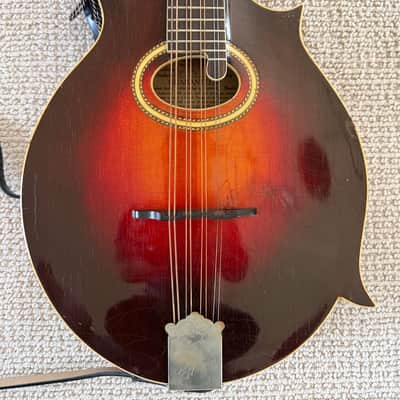
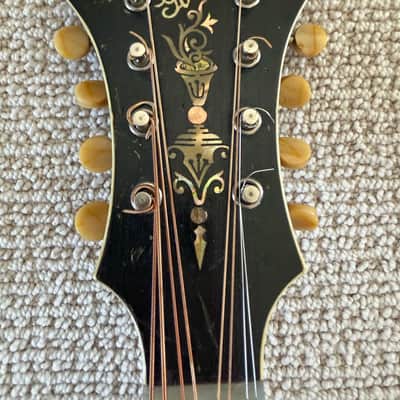
Features of the H-4 mandola include: a total length of 28 ½" bottom to pointy headstock, said headstock having a small scroll on the bass side and a larger scroll on the right. Neither scroll is as large as the prominent body scroll on the upper bass side of the body which is bound in yellowed ivoroid on top, back, neck and peghead. The oval central soundhole is bordered in crème ivoroid, and then there's a ½" space of yellow-to-red sunburst spruce and then there's a large rosette ring comprised of ebony, rope marquetry, ebony, ivoroid, ebony, rope and ebony. The bridge is one piece of ebony with a compensated top, the tailpiece cover is engraved "The Gibson" in script with a floral pattern and is standard for most of the Gibson mandolins of the last century and beyond.
The bridge has been sanded down on its bottom and is shorter than may be standard. The mandola's prior owner has had a refret performed and now it is operating up to its full potential.
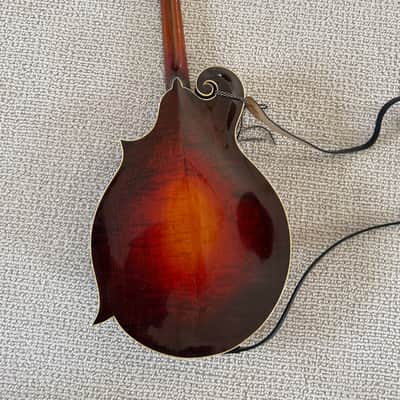
The mandola shows finish checking all over all surfaces, and there are some typical incipient cracks – one at the lower body point, one behind the headstock point and one at the upper treble side adjacent to where the crème binding ends near the 11th fret. There are several areas along the edges of the sides and top and sides and back which in the past had separated and were reglued. There are finish checking and chips out of the back of the headstock on or near the birdsbeak point. While these look a little scary they appear to be merely cosmetic and thankfully not structural. There is wear on the back of the headstock point and elsewhere. There are what appear to be insipient separations on the inside of the large body scroll. There is body contact wear (lighter color finish) on the side of the upper bass bout at the scroll, and an incipient crack coming up from the bass body scroll. There is rust on the adjustable side clamp, crazing and string changing marks on the headplate. The fingerboard measures 1 5/16th" at the nut; the string spacing from first to eighth is 1 9/16th at the saddle.
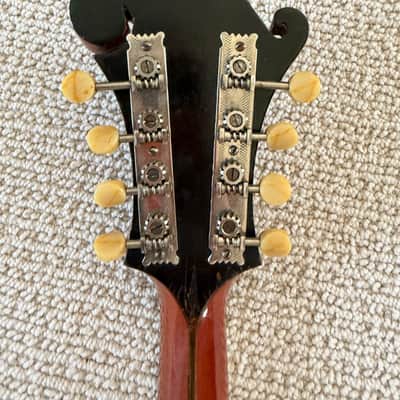
The year 1921 is an important one since it was the year in which the transition was made from non-adjustable truss rodded Gibson instruments to adjustable truss-rodded ones. This mandola was made early enough in the year to have just missed having an adjustable rod. 1918 was the last year in which Gibson routinely supplied their higher grade mandolin family instruments with the magnificent Handel-made tuners whose buttons were inlaid in nickel-silver, pearl and abalone to form small flowers. Ms. Mandola has the equally beautiful but simple amber ivoroid buttons on original four-in-a-row filigreed metal plates.
| Listed | 9 hours ago |
|---|---|
| Condition | Good (Used) Good condition items function properly but may exhibit some wear and tear.Learn more |
| Brand | |
| Model |
|
| Categories | |
| Year |
|
Product safety information may be available here.

