Royal Oak, MI, Estados Unidos
Información sobre este anuncio
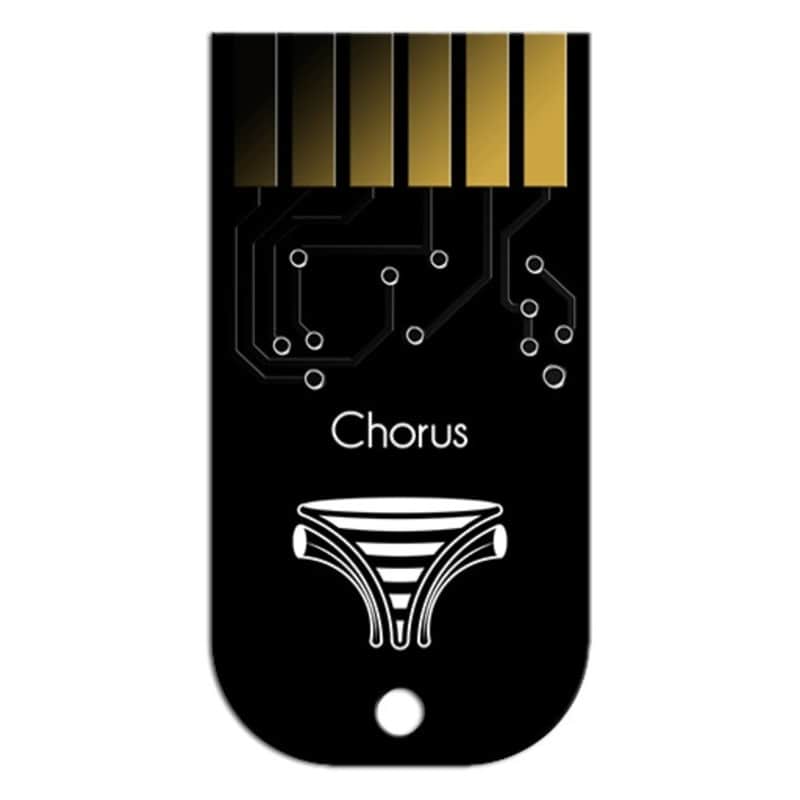
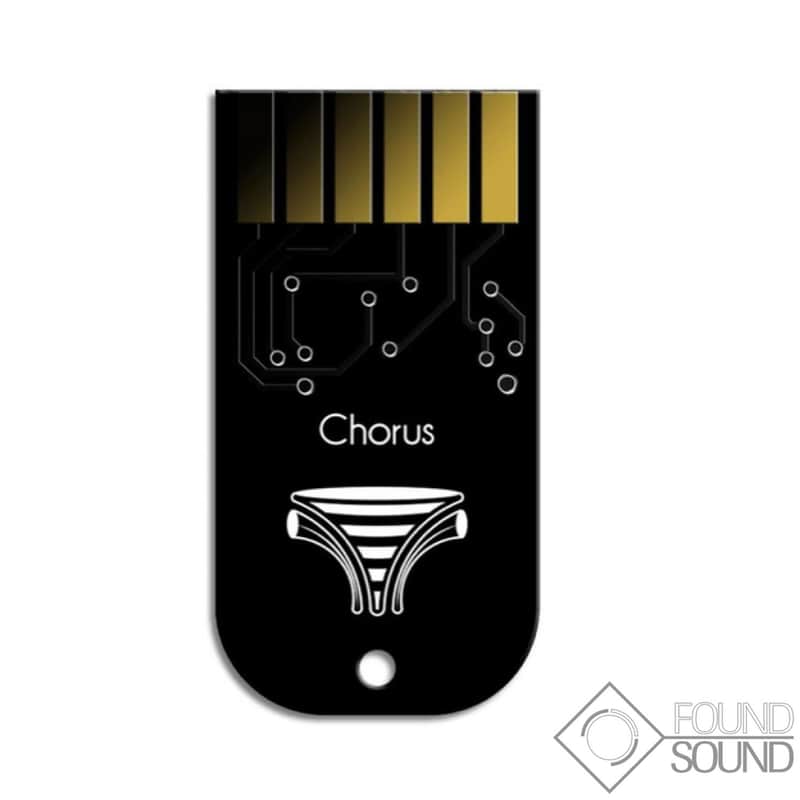
Chorus Z-DSP card
For best results, even with mono signals, use both inputs on the Z-DSP and the stereoout. A short Stackcable can be used to connect the left and right inputs to a mono signal.Chorus is one of the most essential effects for synthesizers and the chorus unit on manyclassic poly synths created much of their sonic signatures. This card for the Z-DSP offers 8different algorithms inspired by some of the most classic effects in the genre.Chorus effects use one or more delay lines which are modulated to produce a ‘doubling’ ofthe sound as if more voices are present. Programs vary from two to six delay line ‘taps’ orvoices. Generally, the more voices the thicker and more complex the sound.The delay times of these programs tend to be in the 18-24 millisecond range which is commonto most of the high end studio devices. Analog pedals are more in the flanger < 10msrange in order to use cheaper BBD parts, but there is also a Dual Flanger program withshorter times on the card.LFO modulation provides a way to not only break up the comb filtering of a static delay,but also creates a sense of movement in stereo. Several of the programs use one or moremethods like multiple LFOs, quadrature LFO, random walk and phasing to produce evenmore movement in the stereo field.LFOs have both Rate and Depth controls: Rate is simply the speed of the LFO, and depth ishow wide the LFO sweeps through the delay line. Most of the Programs on the card haveRates from several seconds to several times a second (0.1 Hz to 6+ Hz). Depth can vary thedelay line position from less than 1ms to the entire delay range of 20ms or more. As theLFO sweeps through the delay line the sound changes pitch producing a ‘detune’ effect.Detuning is really what makes the ‘choral’ element in a Chorus effect.Setting a slow Rate and higher Depth makes the pitch change subtler and can be very effectiveon pad and other ambient sound sources. Increasing the Rate will introduce a morepronounced vibrato effect and extreme settings of Rate and Depth can sound underwater.Adding external Feedback can make the Chorus sound more intense and high levels of feedbackcan add a small room ambience. The Dual Flanger program has an internal feedbackfor the classic Flanger swoosh.Chorus effects can sound quite subtle compared to many other types of effect, and insome cases the effect is only noticed when it is switched off!.
1> Dual ChorusIndependent chorus lines for Left and Right outputs. Each is modulated by a sine LFO withindividual control for the speed of the LFO. The center control sets how deep the modulation sweeps.
RateL - Speed of Left output LFODepth - Amount of modulation sweep for both channelsRateR - Speed of Right output LFO
2> Dimension ?Two chorus delay lines modulated by a single triangle LFO. The orientation of the LFO andsignal phase are inspired by a classic 80s studio rack device. Unlike that unit, this algorithm offersboth LFO rate and the depth of the modulation sweep. A High Pass Filter control removes low endfrom input for a clearer sound. This effect sums input to Mono, and works best with the Mix settingmostly or even fully wet.
Rate - Speed of LFO modulationDepth - Amount of modulation sweep for LFOHPF - High Pass Filter cutoff
3> EnsembleThe ensemble effect is one of the most classic synth effects. Originally made using analogBBD chips, ensemble circuits gave the string synths their ‘string’ sound. This ensemble is derivedfrom that circuit where a slow and fast LFO provide the distinctive ‘string’ modulation. For maximumstring synth effect, set the mix fully wet and feed it saw waves. The center control is for theamount of vibrato - the classic setting is about 35% or so. A High Pass Filter control removes lowend from the input which adds clarity and makes the sound less wobbly. This program sums theinput into mono, but has a wide stereo output and works well 100% wet.
NoneVibrato - AMount of vibrato in output mixHPF - High Pass Filter cutoff
4> 6 Voice ChorusThis is a classic multiple delay line Chorus, found in high end studio effects, that uses 6independent delay lines which are modulated. This program uses two sine LFOs with individualcontrol for the speed of each LFO. The center control sets how deep the modulation sweeps. Thechorus taps are panned across in stereo and have subtle feedback internally.
RateL - Speed of Left output LFODepth - Amount of modulation sweep for both channelsRateR - Speed of Right output LFO
5> Dual FlangeSame basic algorithm as Program #1, but with shorter delay times and a feedback control.Independent delay lines for Left and Right channels. Each is modulated by a sine LFO with therates slightly offset for stereo effect. The center control sets how deep the modulation sweeps.The Feedback control sets the internal feedback amount for more resonant flanging.
Rate - Speed of Left output LFODepth - Amount of modulation sweep for both channels+/-Fdb - Amount of positive or negative signal fed back into delays
6> Diffuse ChorusIndependent chorus lines for Left and Right channels made from allpass delays that wouldnormally be the input ‘diffusion’ section of a reverb. Chaining a few of these delays in a rowmakes for a cross between a chorus and very small room (add external feedback for more reverbtone). Each delay is modulated by one of two sine LFOs with control for the speed of the LFOs.The center control sets how deep the modulation sweeps.
Rate - Speed of LFO modulationDepth - Amount of modulation sweep for LFOHPF - High Pass Filter cutoff
7> Random Chorus 4 VoiceFour independent chorus lines split between Left and Right channels. Each is modulatedby a random walk algorithm with individual control for the speed of the LFO. The Left/Rightcontrols set how deep the modulation sweeps. The randomness of the modulation is a secret ofmany high end studio devices. Internal feedback adds fullness to the sound and at high levelsimparts a small room type ambience. The pitch wobble can be less noticeable compared tousing periodic waveforms for modulation, but at extreme settings the effect is like having a fewtoo many pints at the pub!
DepthL - Amount of modulation for Left side LFOFdbk - Amount of signal fed back into delaysDepthR - Amount of modulation for Right side LFO
8> Tri Stereo ChorusThree delay lines are panned Left, Center and Right in a configuration similar to some rareguitar and electric piano effect units. Each is modulated by quadrature outputs of the same sineLFO with control for the speed of the LFO. The center control sets how deep the modulationsweeps. A High Pass Filter control removes low end from the input which adds clarity and makesthe sound less wobbly. This is summed mono input and very stereo output - try 100% wet!
Rate - Speed of LFO modulationDepth - Amount of modulation sweep for LFOHPF - High Pass Filter cutof
Precio$64
Solo queda 1
Aprovecha antes de que sea demasiado tarde
Política de devoluciones de 30 días
Disfruta de tu nuevo equipo sin preocupaciones