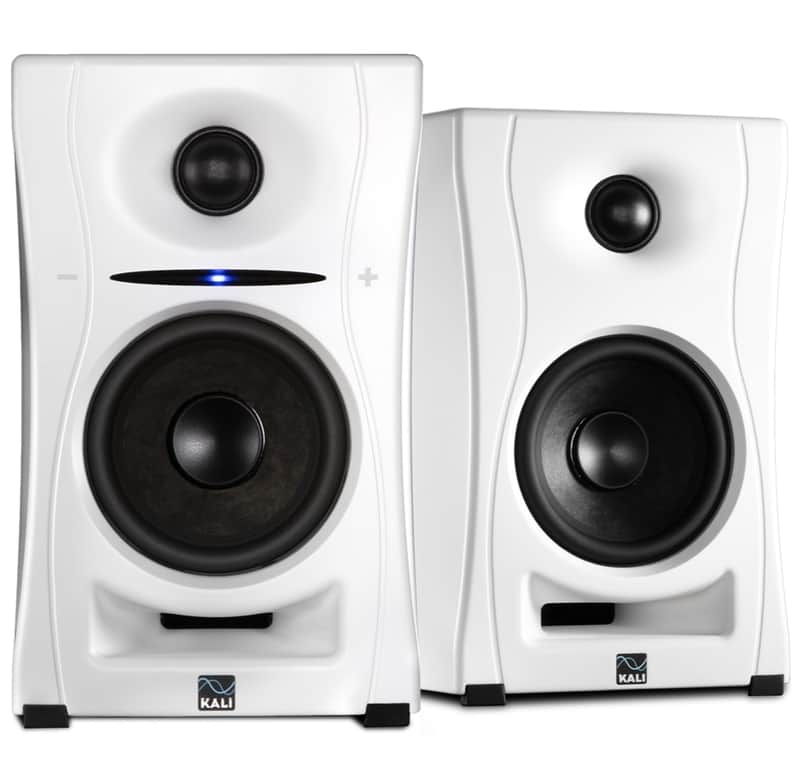
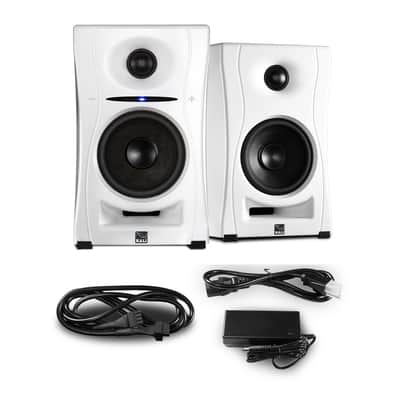
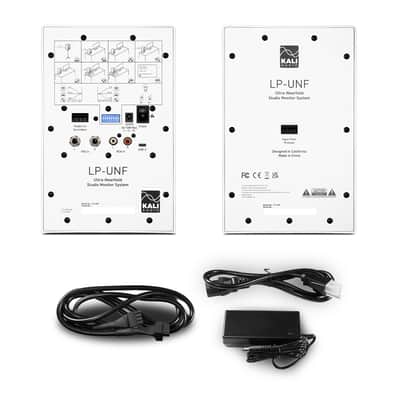
Kali Audio LP-UNF Ultra-Nearfield Studio Monitors (Pair, White) - 4"
This seller has not set a shipping cost for Slovakia. Please contact them to ask about shipping.

Only 1 left
Grab it before it's gone

Our users rate Reverb
Shipping Policy: Please note that we currently ship within Canada only. Offers and orders from outside Canada will not be accepted.
The LP-UNF is an ultra-nearfield desktop studio monitor system designed to be used in small spaces where the ability to get loud is limited, either by room acoustics or the tolerance of neighbors. The LP-UNF presents full-range audio at reference levels with plenty of headroom at 0.8 meters, or about arm’s length.
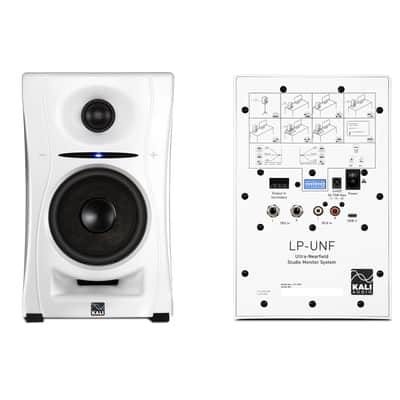
The system is made up of a primary and secondary speaker, each with a 4.5-Inch high excursion woofer and 1-Inch dome tweeter. The LP-UNF features USB-C, TRS, RCA, and Bluetooth inputs for seamless integration into your deskscape.
The LP-UNF uses much of the same technology as Kali’s best-selling LP-6 and LP-8 V2 speakers. A 3-D imaging waveguide is employed to create a detailed, lifelike stereo image where all of the elements of the mix can be clearly perceived in space. The large front-firing port tube uses a unique. fluid dynamics derived shape that eliminates port noise and compression. This allows you to place the speakers against walls without worrying about adverse effects on the port’s performance.
The USB-C input lets users who aren’t recording use the LP-UNF without a separate interface. You’ll enjoy pristine sound with 24-bit/48kHz conversion. This makes the LP-UNF an excellent choice for traveling setups or as a floating pair of speakers in dynamic recording situations.
The LP-UNF is uniquely tuned for its role as a desktop speaker. The desk is accounted for as an acoustic element of the system, solving some of the problems that are typically presented with putting speakers on a desk. DIP switches are provided to account for the position of the system in a room, and for you to dial in bass and treble to your preferences.
Features
- Studio monitor pair (Primary+Secondary.) Each speaker has a 4.5-Inch woofer and a 1-Inch tweeter
- USB, Stereo TRS, RCA, and Bluetooth (5.1) inputs
- Full-range, reference level output at arm’s length.
- Frequency Response (-10 dB:) 39 Hz-25 kHz
Specifications
Powered:
Yes
Amplifier Class:
D
Power Configuration:
2-Channel, Each Channel Bi-amped
HF Power Per Channel
40 W
LF Power Per Channel
40 W
LF Driver:
4.5-Inch Long-Excursion Woofer
HF Driver:
1-Inch Textile Dome
Frequency Response: (-10 dB)
39 Hz - 25 kHz
Frequency Range: (±3 dB)
54 Hz - 21 kHz
Crossover
1950 Hz
SPL:
85 dB Continuous at .8 Meters with 20 dB Headroom
Max SPL:
103 dB
System THD (85dB SPL @.8m):
<2% from 65 Hz to 1000 Hz
<1% from 1000 Hz to 2000 Hz
<0.5% above 2000 Hz
Stereo Inputs
USB-C (Digital)
Bluetooth (Digital)
RCA (Unbalanced, -10 dBV)
TRS (Balanced, +4 dBU)
Bluetooth Version
5.1
Digital Input Conversion
24-bit/48 kHz
Trims:
LF & HF +/-2d
In the box:
Primary LP-UNF Speaker
Secondary LP-UNF Speaker
Power Supply
Local Power Cable
Interconnect Cable
Speaker Height
10 Inches (25.4 cm)
Speaker Width
6.5 Inches (16.4 cm)
Speaker Depth
7.4 Inches (18.6 cm)
Speaker Weight (Primary/Secondary):
3.2kg (7.1 lbs)/3kg (6.6 lbs)
Shipping Height:
15 Inches (381mm)
Shipping Width:
18 Inches (457 mm)
Shipping Depth:
12 Inches (305 mm)
Shipping Weight:
16 lbs (7.3kg)
GTIN
00860007984280
GTIN-12
860007984280
This item is sold As-Described
This item is sold As-Described and cannot be returned unless it arrives in a condition different from how it was described or photographed. Items must be returned in original, as-shipped condition with all original packaging.Learn More.
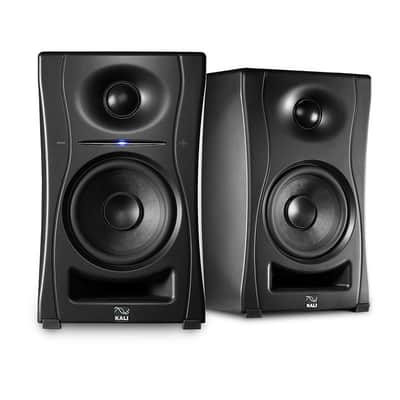
| Condition | Brand New (New) Brand New items are sold by an authorized dealer or original builder and include all original packaging.Learn more |
|---|---|
| Brand | |
| Model |
|
| Finish |
|
| Categories |
Product safety information may be available here.

