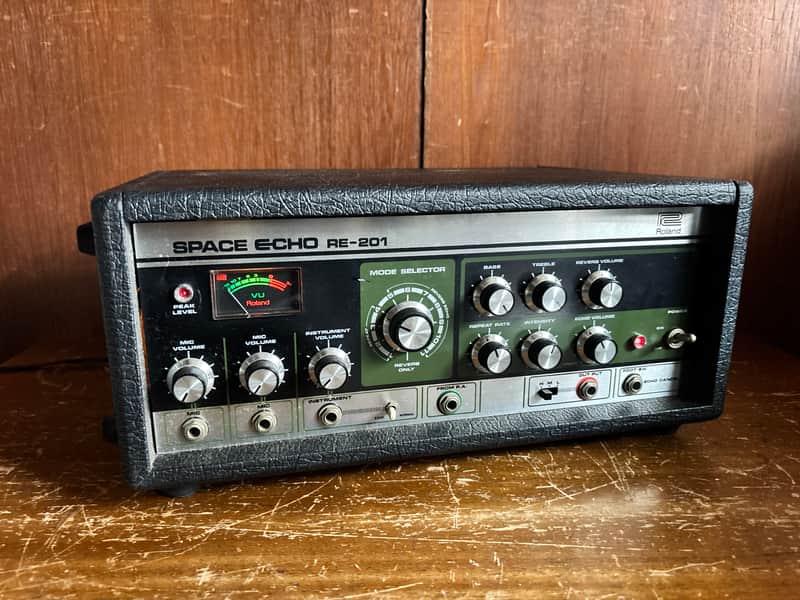
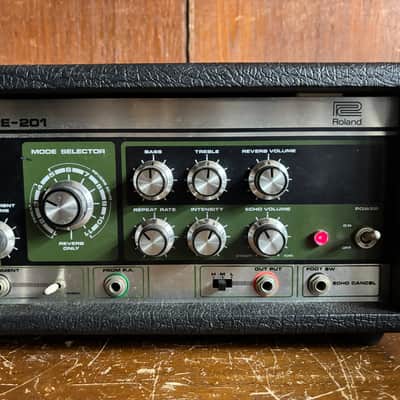
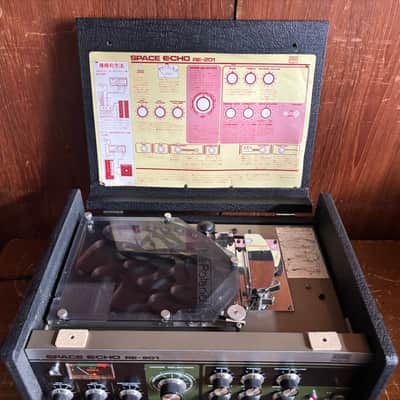
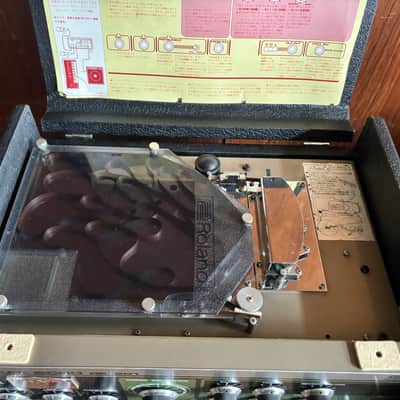
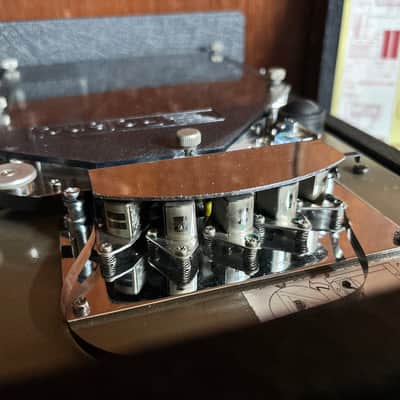
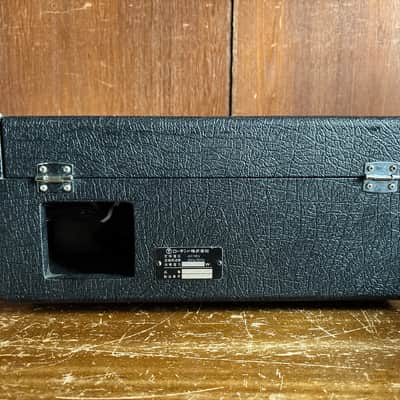
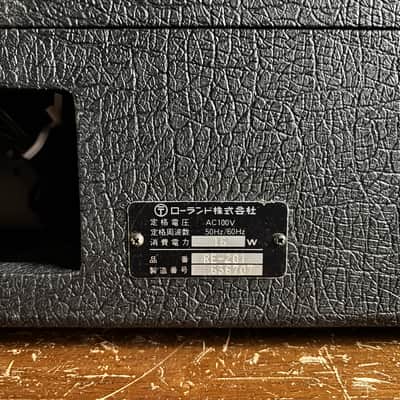
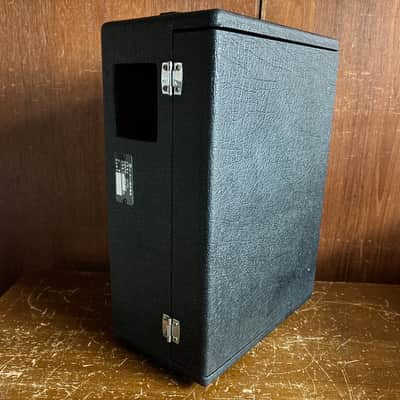
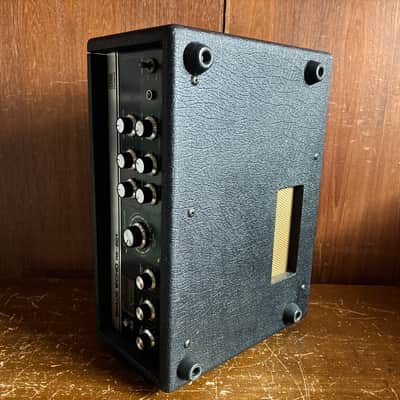
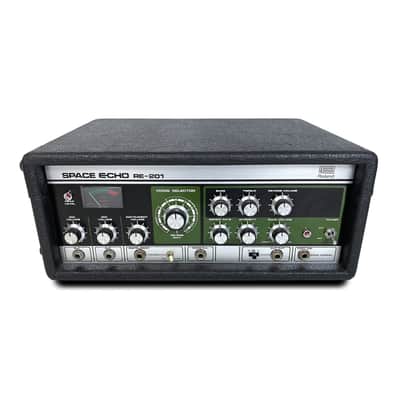
Roland RE-201 Space Echo Vintage Tape-Echo machine

Predicted to Sell Soon
Only 1 available and 1 other person has this in their cart

Our users rate Reverb
BACK IN THE MID-SEVENTIES, THE RE-201 SPACE ECHO UNLEASHED A SOUND THAT CAME STRAIGHT FROM OUTER SPACE. THIS IS ITS STORY…
Over the years, Roland has created a significant number of products that have gone on to become legendary. One of the earliest examples is the Roland RE-201 Space Echo, a combination tape echo and reverb introduced in 1974. While Roland didn’t invent the tape echo itself, they took a fragile and often unreliable technology and turned it into something robust and roadworthy and the RE-201 immediately became the touring and recording studio standard in portable tape echo.
ECHOING THROUGH HISTORY
As anyone who sings or plays an instrument knows, the acoustic space you perform in has a huge impact on the sound. If you perform in a small, dry-sounding space—such as a heavily carpeted room—the sound is small and uninspiring. But if you take that same performance to a large space with hard surfaces, the sound becomes bigger, with the natural reverberation of the room making your performance feel more alive.
Since the dawn of sound amplification and recording, musicians and audio engineers sought a way to add the natural ambience of a large acoustic space to a sound in a controlled manner. This led first to natural echo chambers, where a sound was re-amplified into a large acoustic space and captured with a microphone. Later, electronic methods were developed to create artificial reverberation by amplifying sound waves through metal plates or springs. The spring reverb, first developed for use in home organs, continues to be a staple in guitar amplification.
Shortly after World War II, magnetic tape technology became the standard for audio recording. Audio engineers realised they could also use their reel-to-reel tape recorders to create an echo of a sound for a unique type of artificial ambience. The effect quickly became popular, particularly when a short echo was combined with reverb. This type of “slapback” echo was an essential sound component on early rock and roll recordings, and is still popular today.
THE ROAD TO THE SPACE ECHO
Starting in the 1950s, various inventors came up with ways to create the popular tape echo sound in portable units that could be used by touring vocalists and instrumentalists. Basically, these devices were small, self-contained recorders incorporating a single short tape loop; while popular with musicians, they were quite fragile and didn’t stand up well to the rigours of the road.
In 1973, the fledgling Roland Corporation—now in its second year in business—added the very first “Space Echo” products to its lineup, the RE-100 and RE-200 tape-echo units. These were quickly superceded the following year with the RE-101 and the RE-201. In contrast with competitors’ echo units, both were affordable, built like tanks, and featured inputs for multiple types of sound sources. However, with its extended feature set, the RE-201 quickly became the Space Echo desired by musicians and audio engineers.
[Condition]
This RE-201 is in perfect working condition and in very good condition!!
This unit was professionally checked/cleaned by technician.
Attention!!
This item is 100v 50/60hz. you may need a step down transformer depending on your country.
International Buyers - Please Note:
Import duties, taxes and charges are not included in the item price or shipping charges.
These charges are the buyer's responsibility.
Please check with your country's customs office to determine what these additional costs will be prior to bidding/buying.
For US customers:
Shipping costs include all handling fees, duties, and customs charges. There are no additional costs. You can order as normal.Please note that items over $2,500 will still be subject to customs duties upon receipt.
| Listed | 9 days ago |
|---|---|
| Condition | Very Good (Used) Very Good items may show a few slight marks or scratches but are fully functional and in overall great shape.Learn more |
| Brand | |
| Model |
|
| Finish |
|
| Categories | |
| Year |
|
| Made In |
|
Product safety information may be available here.