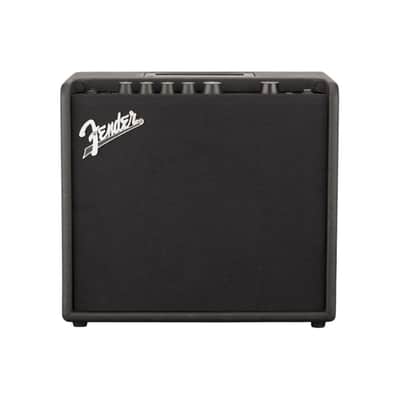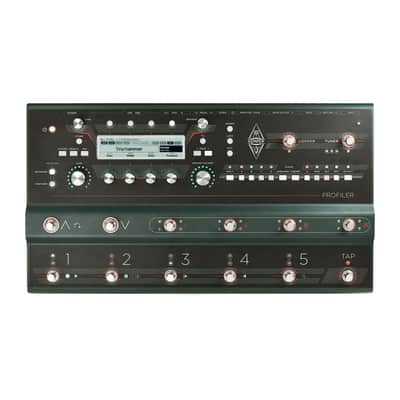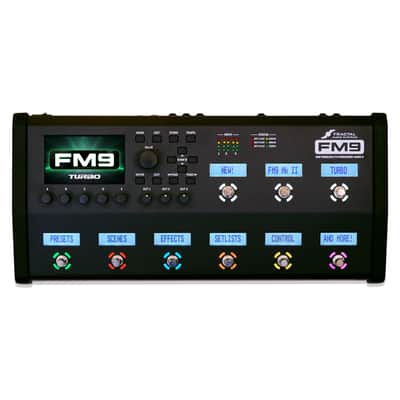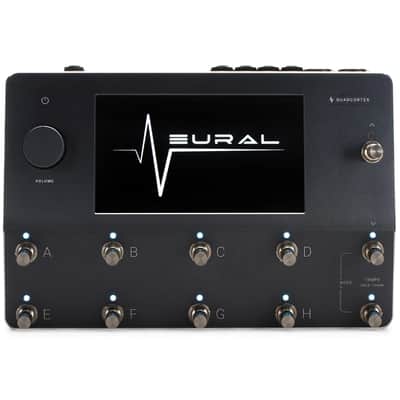
Compare 18 from €1,380
Modeling amps now make up a large part of the non-tube amp market, but what are they? A modeling amp seeks to replicate the sound of another amp—usually one that’s a lot more expensive and, often, classic and sought-after. Vintage tube amps need to be turned up loud to get them to break up and create that lush overdrive that many are so well-known for. And whilst this may well sound great, it’s certainly not practical for every environment. Many modeling amps give you a digital representation of that sound without having to deafen yourself or disturb your neighbors.
So, do modeling amps sound as good as "the real thing?" You’d be hard pressed to find many purists that would say that they do, but modeling amps have certainly gotten very good in the last few years. Many players prefer the feel and response of a real tube amp, but, as technology improves, modelers are certainly getting closer and closer to replicating all the things us guitar players love about tube amps.
You’ll usually find that modeling amps have a wide range of sounds on board. This means they’re versatile—there are plenty out there that offer really nice clean tones and, with just the push of a button or the twist of a knob, you’re into high-gain territory. Other common advantages of modeling amps are that they are usually a lot lighter than tube amps, many have a wide range of on-board effects, and you can usually save and quickly recall your favorite settings.
Modeling amps are great as they give you access to a huge variety of different sounds, and they’re usually cheaper than big tube amps. They come in a variety of sizes—everything from bedroom practice amps all the way up to big, stage-ready units. Here are some of the best modeling amps out there.
Getting a modeling amp as your first guitar amp could be a great call. It will teach you what different sorts of amps sound like and help you find what type of sound you like. If it has effects on board, you can try them all out and discover what suits your playing style and what doesn’t.
On the other hand, if you’re already an established player, getting a small modeling amp will mean that you don’t have to fire up your all-tube stack just to practice a few scales. These amps are practical, sound great at low volumes, and you can even use headphones for silent practice. Some of them even have recording output options so that when inspiration strikes, you can capture it easily.
If you’re playing with other musicians but don’t want anything that’s too big or cumbersome, you’ll probably want to go for a medium-sized amp—somewhere in between 40–100 watts. Different brands tend to rate their wattages in slightly different ways, so you might find that one particular 40W amp is louder than another etc. Also, depending on which model you choose, how loud your band is, and the size of the venue you’re playing, you’ll find that many of these amps would serve you well for small gigs, as well as rehearsals and writing and recording sessions.
Most of these medium-sized modeling amps have many, if not all the features seen on their more powerful counterparts, but they’re just scaled back in terms of power, and will likely only feature one speaker. If you’re looking to pump some serious volume, then you’ll probably need something a little bigger (read on to the next section!).
It can be really useful to have these modeling capabilities when you’re playing shows. There’s a pretty wide range of modeling amps out there that are powerful enough to keep up with any band in terms of volume and tonal desire. These amps become even more useful a tool when you pair them with a footswitch (where one is available), so you can quickly switch between different sounds and settings, whilst concentrating on your performance.
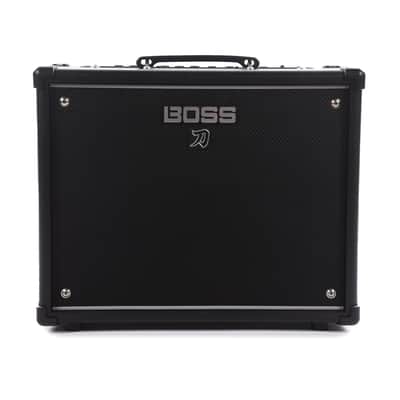
If you’re looking for an amp that will really move some air, then you might want to look at one that has two 12” speakers, like the Blackstar Silverline Stereo Deluxe, or the BOSS Katana 100 212. You could even look at getting a modelling amp head— this way you can pair it with the speaker cabinet(s) of your choice.
Having various menus and categories can be great as it helps organise a massive array of tones, however, there are some people that just want the options laid out in front of them, accessible via traditional knobs and buttons. There are modeling amps out there that don’t require menu scrolling or linking to a smartphone, and they don’t sacrifice anything in terms of sound quality or versatility.
The following amps all feature well laid out control panels, without a single LCD screen in sight—the amp models and effects are accessed and tweaked using knobs, as you’d find on a traditional tube amp. There are some that you can further tweak via a computer or smartphone, but all the core stuff is right there in front of you.